
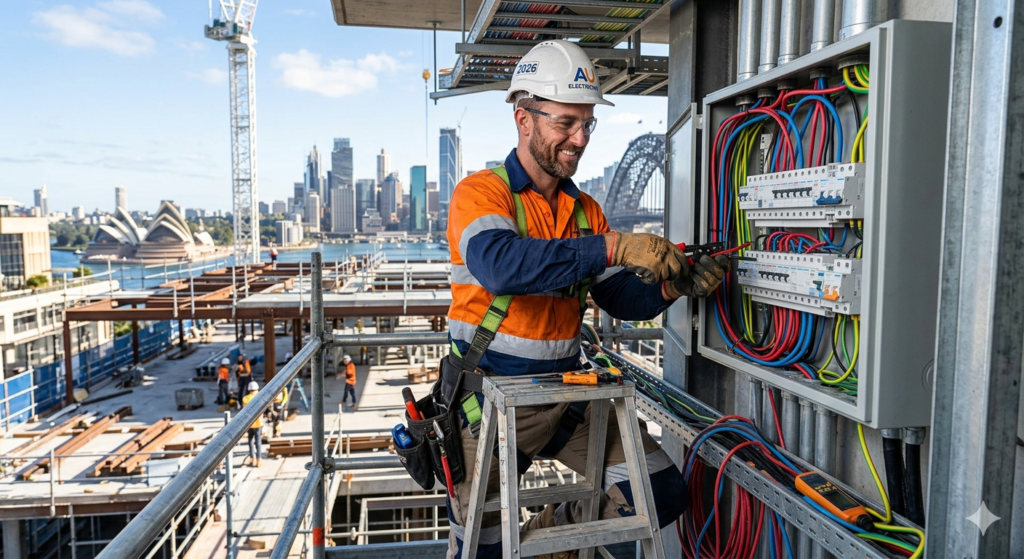

In 2026, demand for electricians is driven by a perfect storm of factors: record infrastructure spending, a booming renewable energy sector, expanding mining operations, and rapid urban construction. Together, these create thousands of genuine job openings for internationally trained electricians every year.
This guide gives you everything you need — from salary benchmarks and visa types to application steps and trusted job portals.
Why Australia Needs Electricians in 2026

Australia is not facing a minor skills gap. According to the National Centre for Vocational Education Research (NCVER), the electrical trades sector is among the hardest-hit industries in the country’s labor market. Several large-scale forces are driving this shortage at once.
National Skill Shortage
The Australian Government’s Skills Priority List (SPL) consistently identifies electricians as workers in national shortage. Domestic training pipelines cannot produce qualified electricians fast enough to meet demand, which opens the door to skilled migrants from overseas.
Government Infrastructure Spending
The Federal Government committed over AUD $120 billion to infrastructure projects between 2023 and 2027. These projects — covering roads, railways, hospitals, schools, and defence facilities — all require licensed electrical work. Consequently, contractors are actively recruiting abroad.
Renewable Energy Expansion
Australia is aggressively pursuing its net-zero targets. The country is rolling out large-scale solar farms, wind turbines, battery storage facilities, and EV charging networks at an unprecedented rate. Each of these projects creates sustained demand for solar electricians and electrical engineers with renewable energy experience.
Mining Sector Demand
Western Australia’s mining boom continues to accelerate, particularly in lithium and iron ore extraction. Mining electricians in remote areas can earn significantly above the national average, often with fly-in fly-out (FIFO) arrangements that include housing and meals.
Urban Construction Growth
Sydney, Melbourne, Brisbane, and Perth are all experiencing major residential and commercial construction booms. New apartment towers, commercial precincts, and public transport infrastructure all require qualified electricians at every stage of construction.
Types of Australia Electrician Jobs Available
see also: Mechanic Jobs in Germany 2026: High Demand, Salaries & Visa Opportunities
Australia Electrician Jobs span a wide range of specializations. Understanding which role matches your background is key to targeting the right employers.
Residential Electrician
Industrial Electrician
Commercial Electrician
Solar Electrician
Mining Electrician
Maintenance Electrician
Apprentice Electrician
Electrical Technician
Additionally, roles such as Electrical Supervisor, Estimator, and Project Manager are available for electricians with management experience. These senior roles often offer salaries above AUD $120,000 per year.
Australia Electrician Jobs Salary in 2026
One of the biggest draws for international applicants is the pay. Australia offers some of the highest electrician salaries in the world. Here is a realistic breakdown of what you can expect in 2026.
Experience Level |
Hourly Rate (AUD) |
Weekly Estimate (AUD) |
Annual Salary (AUD) |
|---|---|---|---|
| Apprentice / Entry-Level | $18 – $25 | $720 – $1,000 | $37,000 – $52,000 |
| Trade-Qualified (1–3 yrs) | $35 – $45 | $1,400 – $1,800 | $72,000 – $93,000 |
| Experienced (4–8 yrs) | $45 – $60 | $1,800 – $2,400 | $93,000 – $124,000 |
| Senior / Specialist | $60 – $80+ | $2,400 – $3,200 | $124,000 – $165,000+ |
| Mining / FIFO Electrician | $65 – $90+ | $2,600 – $3,600 | $135,000 – $187,000+ |
| Regional / Rural Bonus Roles | $40 – $60 | $1,600 – $2,400 | $83,000 – $124,000 |
| Source: SEEK Salary Insights, Indeed Australia, and Workforce Australia — figures are estimates for 2026 and may vary by employer, state, and agreement type. | |||
Overtime and Penalty Rates
Under Australian workplace law, electricians covered by the Electrical, Electronic and Communications Contracting Award 2020 are entitled to penalty rates. Weekend work can attract 150% to 200% of the standard rate. Night shift allowances and remote area loadings further increase take-home pay, especially in the mining and infrastructure sectors.
Mining FIFO roles in Western Australia frequently advertise total packages exceeding AUD $150,000 per year, including accommodation, meals, and flights. These roles are competitive but extremely well-paid.
States with Highest Demand for Australia Electrician Jobs
While Australia Electrician Jobs exist across the entire country, certain states and territories offer significantly more opportunities — and higher wages — than others.
New South Wales (NSW)
- Massive infrastructure pipeline (Sydney Metro, NorthConnex)
- High demand in construction and maintenance
- Avg. salary: AUD $85,000 – $110,000
Victoria (VIC)
- Melbourne’s Suburban Rail Loop driving demand
- Large renewable energy projects statewide
- Avg. salary: AUD $82,000 – $108,000
Queensland (QLD)
- Brisbane 2032 Olympics infrastructure boom
- Strong solar and wind energy pipeline
- Avg. salary: AUD $80,000 – $105,000
Western Australia (WA)
- Highest-paying state for electricians
- Mining, LNG, and FIFO opportunities
- Avg. salary: AUD $95,000 – $187,000+
South Australia (SA)
- Largest renewable energy hub in Australia
- Defence industry electrical roles growing
- Avg. salary: AUD $78,000 – $100,000
Regional Australia
- Regional visas (subclass 491/494) available
- Lower competition, faster PR pathways
- Avg. salary: AUD $75,000 – $110,000
Visa Sponsorship for Australia Electrician Jobs
Many international applicants wonder whether Australian employers genuinely sponsor overseas electricians. The answer is yes — and the visa system is designed to support exactly this. There are several clear pathways to consider.
Subclass 482 — Temporary Skill Shortage (TSS) Visa
This is the most common route. A sponsoring employer applies on your behalf. The TSS visa allows you to live and work in Australia for 2–4 years, with the possibility of extending or converting to permanent residency.
- Requires an approved sponsor employer
- Occupation must appear on the relevant skilled occupation list
- English requirement: IELTS 5.0 (with no band below 4.5) or equivalent
Subclass 189 — Skilled Independent Visa
A points-tested permanent visa for electricians who meet the skills and English requirements without needing employer sponsorship. You must receive an invitation to apply, so a strong points score is essential.
Subclass 190 — Skilled Nominated Visa
Requires nomination from an Australian state or territory government. In return, you receive 5 extra points in the SkillSelect system. Electricians are regularly nominated by NSW, Victoria, Queensland, and WA.
Subclass 491 / 494 — Regional Sponsored Visas
These visas are specifically designed for regional Australia. They attract additional SkillSelect points and typically have faster processing times. After 3 years of living and working regionally, you may be eligible to apply for permanent residency via subclass 191.
Subclass 186 — Employer Nomination Scheme (ENS)
A direct pathway to permanent residency. Requires employer sponsorship, and you must have worked for the nominating employer for at least 2–3 years on a temporary skilled visa, or meet the direct entry stream requirements.
For official information on all visa types, always refer to the Australian Department of Home Affairs at immi.homeaffairs.gov.au.
Qualifications Required for Australia Electrician Jobs
Australia has strict licensing requirements for electricians. Unlike some countries, you cannot simply arrive with overseas credentials and start work. You need to follow a recognition process. Here is what is typically required:
Trade Certification
To work as a licensed electrician in Australia, you generally need a Certificate III in Electrotechnology Electrician (UEE30820) or an equivalent overseas qualification that has been formally assessed and recognised.
Skills Assessment
Before applying for most skilled migration visas, you must complete a skills assessment through Trades Recognition Australia (TRA). TRA evaluates your qualifications and work experience against Australian standards. Visit tradesrecognitionaustralia.gov.au to begin.
Electrical Licence
Each Australian state issues its own electrical contractor or worker licence. Once you are in Australia with your skills recognised, you apply for a licence from the relevant state authority — for example, NSW Fair Trading in New South Wales, or the Electrical Safety Office in Queensland.
English Language Requirement
Most skilled visas require a minimum score of IELTS 5.0 overall (with no individual band score below 4.5). Some employers and state nomination programs may require higher scores. Preparing for IELTS well in advance is highly recommended.
Work Experience
TRA typically requires a minimum of 3 years of relevant trade experience after completing your qualifications. This must be documented with reference letters and pay slips from past employers.
Checklist
- Overseas trade qualification in electrotechnology
- Minimum 3 years post-qualification work experience
- Completed TRA skills assessment
- English test (IELTS, PTE, or equivalent)
- Valid SkillSelect Expression of Interest (for independent visa pathways)
- State electrical licence (after arrival)
How to Apply for Australia Electrician Jobs
The application process for Australia Electrician Jobs involves several distinct stages. Following these steps in order will save you time, money, and frustration.
Prepare a Professional Australian-Style CV
Your resume should be 2–3 pages, clearly listing your qualifications, certifications, tools you are proficient with, and key projects. Tailor it to Australian employers — avoid photos and date of birth, which are not customary in Australian CVs.
Verify and Document Your Qualifications
Gather certified copies of your trade certificates, apprenticeship records, reference letters from employers, and payslips. These documents are essential for your TRA assessment.
Complete Your TRA Skills Assessment
Submit your application to Trades Recognition Australia. Processing times vary, but typically take 10–20 weeks. A positive assessment is required before you can proceed with most visa pathways.
Lodge an Expression of Interest via SkillSelect
If you are pursuing a points-tested visa (subclass 189, 190, or 491), create a profile in the Australian Government’s SkillSelect system at immi.homeaffairs.gov.au/skillselect. Higher points scores receive invitations to apply faster.
Apply to Approved Sponsoring Employers
Use SEEK, Indeed, LinkedIn, and Workforce Australia to apply for roles with employers who are approved sponsors. Look for the words “visa sponsorship available” or “we welcome overseas applicants” in job listings.
Attend Interviews (In Person or Virtually)
Many Australian employers conduct video interviews for overseas candidates. Prepare to discuss your specific trade experience, safety knowledge, and familiarity with Australian electrical standards (AS/NZS 3000 — the Wiring Rules).
Employer Lodges Visa Sponsorship
Once you receive a job offer, your employer nominates you for a TSS or ENS visa. You then complete your personal visa application with the Department of Home Affairs. Processing times for the subclass 482 visa average 2–6 months.
Relocate and Apply for State Electrical Licence
After arriving in Australia, apply for your state electrical worker licence through the relevant state authority. Until this licence is issued, you cannot perform licensed electrical work independently.
Trusted Websites to Find Australia Electrician Jobs
Always use reputable, verified platforms when searching for Australia Electrician Jobs. Here are the best official and established job sites to use in 2026.
Best Tips to Secure Australia Electrician Jobs Fast
Thousands of electricians apply for Australian roles every month. To stand out and land a position faster, follow these proven strategies.
- Start your TRA skills assessment early. It can take up to 20 weeks. Do not wait until you have a job offer — begin the process as soon as you decide to apply.
- Target regional roles. Regional areas like Broken Hill (NSW), Cairns (QLD), and Geraldton (WA) have fewer applicants and faster visa processing. Regional sponsorship also offers additional SkillSelect points.
- Get familiar with AS/NZS 3000 (the Wiring Rules). Mentioning awareness of Australian electrical standards in your interview demonstrates serious intent and boosts employer confidence.
- Build a LinkedIn profile that highlights Australian-relevant skills. Many Australian recruiters source candidates directly from LinkedIn. Use terms like “licensed electrician,” “switchboard installation,” and “solar PV installation.”
- Apply to labour hire and recruitment agencies. Companies like Programmed, Hays, and Chandler Macleod regularly place electricians in large infrastructure projects and can fast-track employer sponsorship.
- Include measurable achievements in your CV. For example: “Completed electrical installation for 42-unit residential complex on time and within budget.” Specificity makes a strong impression.
- Join Australian electrical trade forums and Facebook groups. Communities like “Electricians in Australia — International” connect overseas tradespeople with employers actively seeking migrants.
- Prepare for the trade skills test. Some employers and TRA assessors require a practical test. Review Australian wiring diagrams, safety procedures, and fault-finding techniques before your assessment.
Common Mistakes to Avoid
Many skilled electricians miss out on Australian opportunities because of avoidable errors. Make sure you do not fall into these traps.
Watch Out For These Mistakes
- Applying without a TRA skills assessment: Employers sponsoring skilled visas legally require a valid skills assessment. Applications without one are almost always rejected or ignored.
- Using a generic CV not tailored for Australia: Australian employers expect concise, achievement-focused CVs without photos, marital status, or religion. Sending a European or African-style CV reduces your shortlisting chances significantly.
- Applying only to capital cities: Sydney and Melbourne are the hardest markets for overseas applicants because of high competition. Regional opportunities are far more accessible and often better paying after allowances.
- Paying upfront “visa guarantee” fees to third parties: Legitimate employers do not charge you to sponsor your visa. Any agency or recruiter asking for upfront payment for a “guaranteed visa” is a scam. Always verify through the Australian Department of Home Affairs.
- Underestimating English requirements: Even if your English is conversational, Australian IELTS requirements must be met formally. Plan and sit your English test well before applying.
- Not accounting for Australian licensing time: Your overseas license does not automatically transfer. Factor in 3–6 months for the state licensing process when planning your relocation timeline.