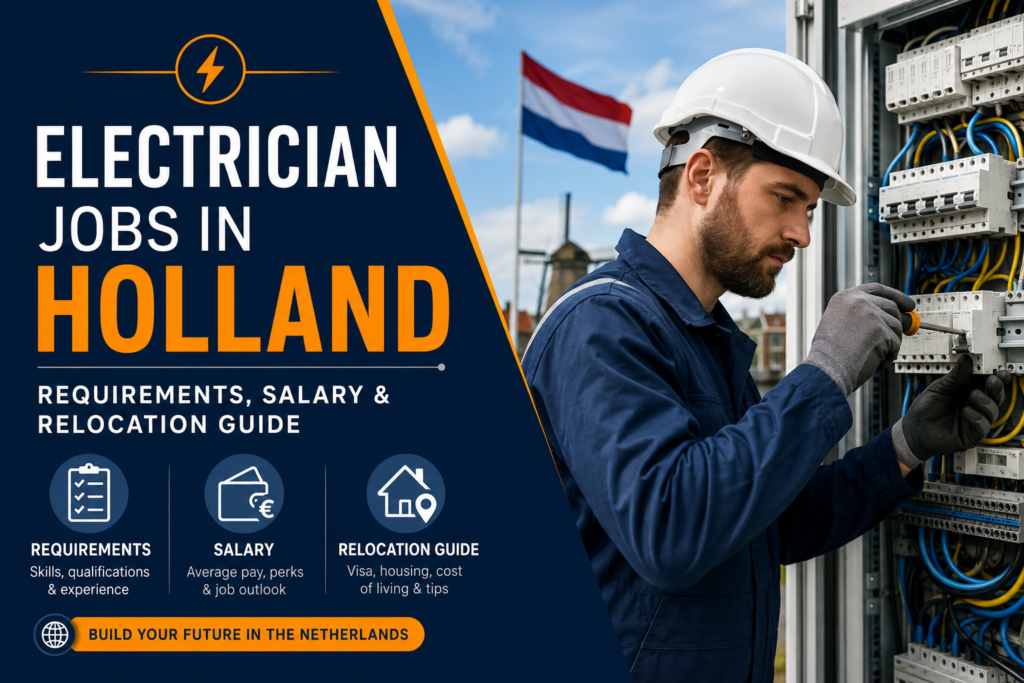

Electrician jobs in Holland are among the most in-demand skilled trade positions in Europe right now — and international applicants have never had a better window to apply. This guide covers everything you need: qualifications, salary benchmarks, visa pathways, and a step-by-step relocation plan.
The Netherlands has quietly become one of Europe’s most welcoming destinations for foreign electricians. With a booming construction sector, ambitious green energy targets, and a documented shortage of qualified tradespeople, electrician jobs in Holland are opening up at a pace the local workforce simply cannot keep up with. Whether you are an experienced industrial electrician, a certified residential installer, or someone midway through your trade career, the Dutch market has something to offer you.
What makes Holland particularly attractive is the combination of competitive pay, strong worker protections, a high standard of living, and a clear legal framework for international skilled workers. This guide walks you through every stage — from checking your qualifications to landing your first contract and settling into life in the Netherlands.
Why Electrician Jobs in Holland Are in High Demand
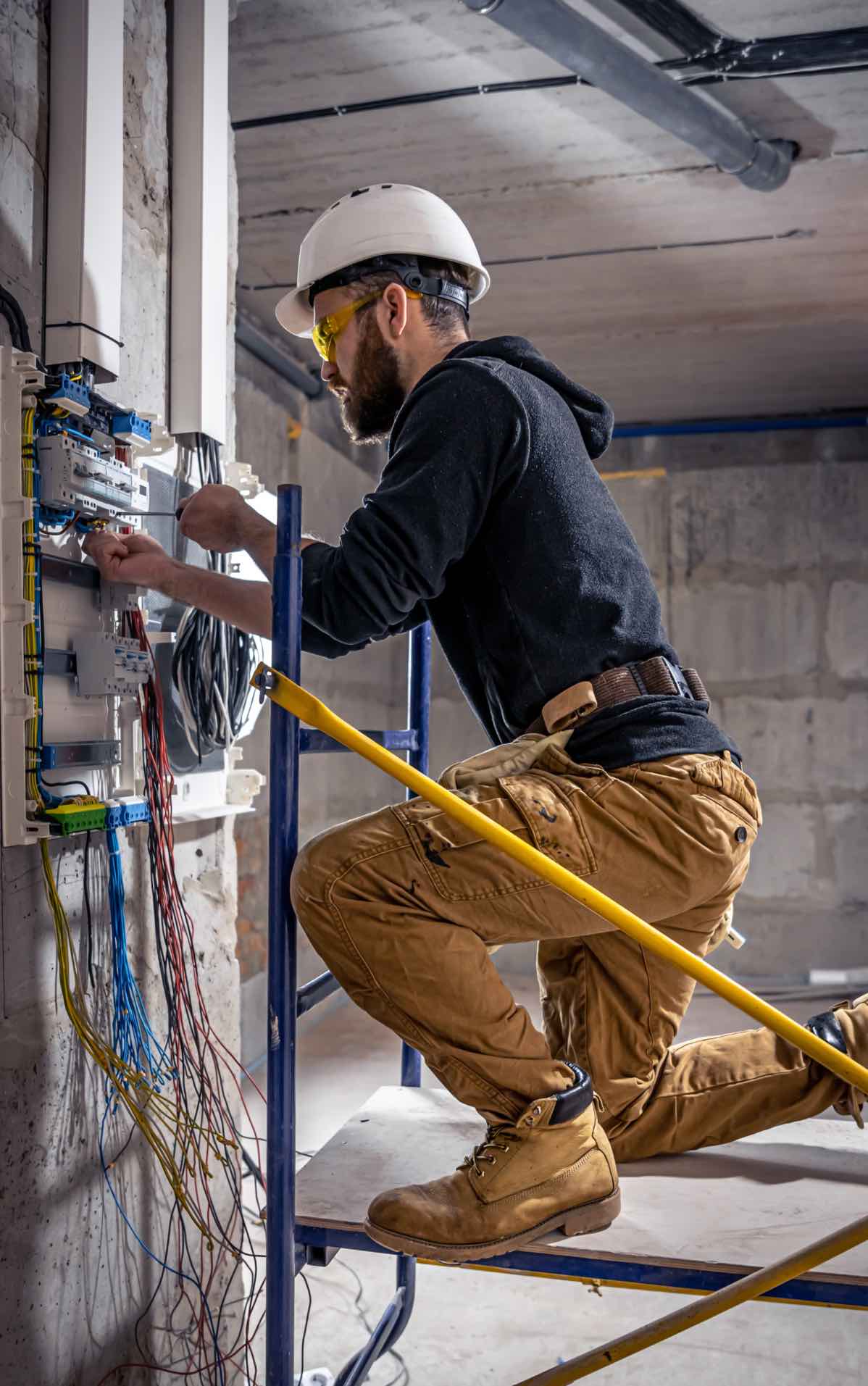
The demand for qualified electricians in the Netherlands is structural — meaning it is not a temporary spike but a long-term trend driven by several converging forces. Understanding these forces helps you position yourself as exactly the kind of worker Dutch employers are looking for.
Growth of the Dutch Construction Industry
The Netherlands is in the middle of an enormous construction and infrastructure drive. The government has committed to building hundreds of thousands of new homes by 2030 to address a severe housing shortage. Alongside residential construction, major data centre, logistics, and energy infrastructure projects are underway across the country. Every single one of these projects requires qualified electricians at multiple stages — from first-fix wiring to commissioning and sign-off.
The port of Rotterdam, Europe’s largest, is continuously expanding its electrified logistics and automation systems. Eindhoven’s high-tech manufacturing cluster around ASML and Philips generates steady demand for industrial electricians with PLC and automation skills. This is a market with depth, not just breadth.
Shortage of Skilled Electricians
The Dutch technical labour market has been under pressure for years. An ageing workforce of trained electricians is retiring faster than the education system can replace them. Vocational training colleges (MBO schools) are producing graduates, but not enough to meet demand across construction, maintenance, and industrial sectors simultaneously.
This shortage creates direct benefits for international applicants: employers are more willing to sponsor work permits, offer relocation packages, and provide on-the-job Dutch language support than they were a decade ago. Several large Dutch technical staffing agencies now actively recruit internationally as a matter of standard business practice.
Opportunities for International Workers
EU and EEA citizens can work in the Netherlands without any visa or permit — they simply need a valid passport or national ID. For non-EU nationals, the Dutch immigration system offers a structured pathway through the GVVA (single permit combining residence and work authorisation), which employers can apply for on your behalf. The labour market shortage in skilled trades works in your favour, as it makes the required labour market test easier to pass.
English is widely spoken in professional environments and in the major cities. While Dutch language skills certainly help you integrate and progress faster, it is entirely possible to begin your career in Holland as an English speaker.
Requirements for Electrician Jobs in Holland
See also: Australia Ausbildung Jobs with Visa Sponsorship: Latest Opportunities and Requirements
Dubai Electrician Jobs in UAE 2026 Dubai & Abu Dhabi Hiring Now
The Netherlands maintains clear standards for what it expects from electricians working on Dutch sites. Meeting these requirements — or having a credible plan to meet them — will determine how quickly you can get hired.
Educational Qualifications
Most Dutch employers require a minimum of an MBO level 3 or level 4 qualification in electrical installation or a directly comparable foreign credential. MBO (Middelbaar Beroepsonderwijs) is the Dutch vocational secondary education system, roughly equivalent to a City & Guilds Level 3 NVQ (UK), a Berufsschule diploma (Germany), or an associate degree in electrical technology (North America).
If your qualification comes from outside the Netherlands, you can have it assessed by Nuffic, the Dutch organisation for internationalisation in education. Nuffic issues an official statement of equivalency, which significantly strengthens your job application.
Required Certifications
Working on Dutch electrical installations requires familiarity with NEN 1010 — the Dutch standard for low-voltage electrical installations. This is the local equivalent of the IEC 60364 series and is mandatory for all installation work carried out in the Netherlands. Many employers will train newly hired international electricians on NEN 1010 specifics, but demonstrating awareness of it in your interview sets you apart.
- NEN 1010 awareness (Dutch low-voltage installation standard)
- VCA / SCC Health & Safety certificate (strongly preferred for industrial and construction sites)
- ATEX certification for hazardous environments (petrochemical, port, or offshore roles)
- BEI (Beveiligd Elektrisch Installateur) licence for security systems work
- First Aid / BHV (bedrijfshulpverlening) certificate
Work Experience Requirements
Entry-level positions typically accept candidates with 1–2 years of hands-on trade experience beyond their training. Mid-level roles expect 3–5 years. Senior or lead electrician roles — particularly in industrial, offshore, or E&I (electrical and instrumentation) environments — generally require 7+ years of verified, relevant experience.
Practical experience on commercial or industrial projects carries more weight than residential-only backgrounds for most Dutch employers. If you have worked on large infrastructure, manufacturing, or data centre projects, highlight this prominently.
Language Requirements
For most field electrician roles, Dutch at A2–B1 level is preferred and often necessary for safe communication on-site. Some internationally oriented employers and staffing agencies conduct their hiring process entirely in English and provide Dutch language courses as part of their onboarding.
If you are serious about relocating to Holland as an electrician for the long term, investing in Dutch language study before you arrive is one of the highest-return actions you can take. The Inburgeringscursus (civic integration course) is a practical starting point.
Skills Employers Look For
- Ability to read and interpret technical drawings and wiring schematics
- Proficiency with testing and measuring equipment (multimeters, insulation testers, PAT)
- Knowledge of three-phase systems and industrial distribution panels
- PLC familiarity (Siemens, Allen-Bradley) — especially valuable in Eindhoven and Rotterdam
- Renewable energy systems (solar PV, heat pumps, EV charging infrastructure)
- Strong safety culture and compliance mindset
Salary Expectations for Electrician Jobs in Holland
Salaries for electrician vacancies in the Netherlands are competitive by European standards. Below are current benchmarks based on 2026 market data.
Entry-Level Electrician Salary
An entry-level electrician with 1–3 years of experience can expect a gross annual salary of approximately €42,000–€43,000 per year, according to SalaryExpert 2026 data. This typically translates to a net monthly income of roughly €2,200–€2,500 after Dutch income tax and social security contributions, depending on individual circumstances.
Experienced Electrician Salary
Mid-level electricians with 4–7 years of experience earn in the region of €50,000–€59,000 gross per year. Senior-level professionals with 8+ years of experience — particularly those in industrial, offshore, or specialist high-voltage roles — can reach €66,000–€77,000+ gross annually.
For those working through staffing or secondment agencies, pay is often quoted as net weekly figures. General installation roles currently advertise around €550–€700 net per week, while industrial electrician roles run closer to €700 net per week.
| Experience Level | Gross Annual | Approx. Net Monthly | Notes |
|---|---|---|---|
| Entry (1–3 yrs) | €42,000–€43,000 | €2,200–€2,500 | Residential / general installation |
| Mid-Level (4–7 yrs) | €50,000–€59,000 | €2,700–€3,200 | Commercial / light industrial |
| Senior (8+ yrs) | €66,000–€77,000+ | €3,500–€4,200 | Industrial, E&I, specialist roles |
| Certified (Amsterdam) | ~€69,300 | €3,700–€4,000 | 18% premium vs. national avg. |
Factors Affecting Salary
Location plays a significant role. Amsterdam consistently pays the highest salaries — roughly 18% above the national average for certified electricians — but also has the highest cost of living. Rotterdam premiums for port and industrial work reflect the specialist skills required. Smaller cities like Groningen or Zwolle pay less gross, but your purchasing power can still be strong.
Sector matters equally. Offshore and petrochemical roles, high-voltage work, and E&I positions in manufacturing all attract significant premiums. Holding specialist certifications (ATEX, high voltage, fire alarm systems) can add €5,000–€15,000 to your annual package.
Benefits and Overtime Opportunities
Most Dutch electrician positions include 25 days of paid annual leave, an 8% holiday allowance (vakantiegeld) paid annually on top of your salary, pension contributions, and travel reimbursement. Collective Labour Agreements (CAOs) in construction and technical installation sectors govern minimum pay scales, overtime rates (typically 125–150% for evenings and weekends), and working conditions — offering strong baseline protections for workers.
Pro Tip
Always clarify whether a salary offer is gross (bruto) or net (netto), and whether the 8% holiday allowance is included or paid separately. Dutch job ads often quote gross monthly figures.
Visa and Work Permit Requirements for Foreign Electricians
Understanding the Dutch immigration system is essential before you begin applying. The rules differ significantly depending on your nationality.
Types of Work Visas For Electrician Jobs in Holland
EU/EEA/Swiss nationals require no work permit whatsoever. A valid passport or national identity card is sufficient to work legally in the Netherlands.
Non-EU nationals require work authorisation issued by the Dutch Immigration and Naturalisation Service (IND) or the Employee Insurance Agency (UWV). The most relevant permits for electricians are:
- GVVA (gecombineerde vergunning voor verblijf en arbeid) — the standard single permit combining residence and work rights, valid for the duration of your contract (typically 1–2 years, renewable)
- TWV (tewerkstellingsvergunning) — a separate work permit used when the employer does not hold recognised sponsor status
- Highly Skilled Migrant Visa (Kennismigrantvisum) — fast-track permit for specialists meeting minimum salary thresholds (€5,942/month gross for age 30+, €4,357 for under 30 in 2026)
- EU Blue Card — for higher-qualified professionals; similar salary thresholds apply
Most electricians will enter on the GVVA route, which requires your employer to demonstrate that no suitable EU candidate was available (the labour market test), though this test is easier to pass in shortage occupations like skilled electrical trades.
Employer Sponsorship
Your Dutch employer plays the central role in the permit process. To sponsor a non-EU worker, the employer must be an IND-recognised sponsor (erkende referent). Only recognised sponsors can apply for Highly Skilled Migrant or EU Blue Card permits. For GVVA applications, the employer files through the IND portal and, where required, obtains a positive labour market opinion from the UWV.
From January 2026, the IND requires recognised sponsors to retain bank statements confirming salary payments — not just payslips — as part of their ongoing compliance obligations. Employers who fail to meet their sponsor obligations can lose their recognised status, so established sponsors take this seriously.
Residence Permit Process
Once your employer’s permit application is approved, you will need to apply for a Machtiging tot Voorlopig Verblijf (MVV) — a long-stay entry visa — at the Dutch consulate or embassy in your home country (unless you are from a country exempt from this requirement). After arriving in the Netherlands, you will collect your residence permit card from the IND service desk and register with your local municipality (gemeente).
Important Immigration Requirements For Electrician Jobs in Holland
- Valid passport with at least 6 months’ remaining validity
- Original job offer / employment contract from a Dutch employer
- Certified copies of educational qualifications and work experience documents
- Proof that the employer is IND-recognised or has obtained a TWV
- Health insurance (verplichte zorgverzekering) — mandatory from your first day of residence
- DigiD (Dutch digital identity) — required for nearly all government services
How to Find Electrician Jobs in Holland
The Dutch job market is well-served by both general and specialist portals. Using multiple channels simultaneously — rather than relying on a single platform — significantly improves your chances of finding electrician vacancies in the Netherlands that match your profile.
Beyond job boards, consider reaching out directly to large Dutch technical installation companies such as Croonwolter&dros, Enexis, Alfen, and TBI. Staffing agencies like Celoria Recruitment and Abroad Experience specialise in placing international skilled workers and can handle much of the paperwork for you.
Relocation Guide for Electricians Moving to Holland
Relocating to Holland as an electrician involves more than just landing a job offer. Here is a practical breakdown of the key steps you will need to manage upon arrival.
Finding Accommodation
The Dutch rental market, particularly in Amsterdam and Utrecht, is highly competitive. Start your search early and use platforms like Funda.nl, Pararius.nl, and Kamernet.nl. Many staffing agencies and larger employers arrange or subsidise accommodation for incoming international workers — always ask about this during negotiations.
Expect to pay €1,200–€1,800/month for a one-bedroom flat in Amsterdam or Utrecht. Rotterdam and Eindhoven are noticeably more affordable, at €900–€1,400/month for equivalent property. Smaller cities and towns can be significantly cheaper still.
Cost of Living
The Netherlands has a moderate-to-high cost of living by European standards. Monthly estimates for a single person outside Amsterdam: rent €1,000, groceries €300–€400, transport (OV-chipcard) €100–€150, utilities €150–€200, and personal expenses €200–€300. All-in, budget approximately €1,800–€2,400/month excluding rent.
Opening a Bank Account
Most Dutch banks — ABN AMRO, ING, and Rabobank being the main three — require your BSN (burgerservicenummer), which is your Dutch citizen service number. You receive this when you register with your municipality. Online challenger banks like Bunq offer faster account setup for newcomers with limited documentation.
Health Insurance Requirements
Health insurance is legally mandatory for anyone residing or working in the Netherlands. You must take out a standard Dutch health insurance policy (basisverzekering) within four months of registering as a resident. The standard premium is approximately €130–€160/month in 2026. You can apply for a government healthcare allowance (zorgtoeslag) if your income qualifies.
Registering with Local Authorities
Within five days of moving into your permanent address, you must register at your local gemeente (municipal office). Bring your passport, residence permit, and rental agreement. This registration gives you your BSN, which you need for banking, healthcare, tax, and nearly every official process in the Netherlands.
Key Registration Steps
- Arrive
- Register at Gemeente
- Receive BSN
- Open bank account
- Take out health insurance
- Apply for DigiD.
This sequence unlocks access to virtually all services in the Netherlands.
Best Cities for Electrician Jobs in Holland
Each major Dutch city has its own labour market characteristics. Here is what you need to know about the top five destinations for electrical technician jobs in Holland.
Amsterdam
Highest salaries (+18% avg). Strong demand for commercial, data centre, and smart building electricians. High cost of living. Best for senior professionals.
Rotterdam
Europe’s largest port drives exceptional demand for industrial and E&I electricians. Petrochemical and offshore roles pay significant premiums. More affordable than Amsterdam.
Utrecht
Central location and large infrastructure projects. Growing residential and commercial construction. Excellent rail connections to all other major cities.
Eindhoven
Home to ASML and Philips campuses. Strong demand for automation, PLC, and high-tech installation electricians. Growing tech hub with an international workforce.
The Hague
Government and international organisation offices drive steady demand for commercial and security system electricians. Slightly lower cost of living than Amsterdam.
Tips to Increase Your Chances of Getting Hired
Competition for the best roles is real, especially from within the EU. These practical steps will meaningfully improve your application’s success rate.
Create a Dutch-Style CV
Dutch CVs are concise — typically one to two pages — and lead with a brief professional profile followed by work experience in reverse chronological order. Include a professional headshot (standard practice in the Netherlands), your nationality, and your work permit status. Quantify your achievements where possible: number of installations completed, team sizes managed, project values.
Obtain Relevant Certifications
Before applying, invest in obtaining a VCA (Veiligheid, Gezondheid en Milieu Checklist Aannemers) health and safety certificate — it is required on virtually all Dutch industrial and construction sites and takes just a few days to prepare for and pass. If you can demonstrate familiarity with NEN 1010 or complete a short Dutch electrotechnical safety course, mention it explicitly.
Build a Professional LinkedIn Profile
Dutch technical recruiters heavily use LinkedIn. Ensure your profile lists your certifications, your relevant project experience, and your willingness to relocate to the Netherlands. Connect with Dutch technical recruitment agencies directly — many will reach out if your profile matches an active vacancy.
Apply Through Multiple Channels
Do not limit yourself to a single portal. Apply through Indeed.nl and LinkedIn simultaneously, register your CV with two or three staffing agencies (Randstad, Tempo-Team, and one specialist such as Undutchables or Celoria), and monitor company career pages directly. Persistence and volume matter in the Dutch market — follow up applications within one to two weeks.
Quick Wins Before You Apply
Book and pass your VCA exam. Register on LinkedIn with Dutch-relevant keywords. Get your qualifications assessed by Nuffic. These three steps alone put you ahead of the majority of international applicants.
Electrician Jobs in Holland: Your Next Step Starts Today
Electrician jobs in Holland represent a genuine career and lifestyle opportunity for qualified tradespeople from around the world. The combination of high demand, competitive salaries, strong worker protections, and a clear immigration pathway makes the Netherlands one of the most practical destinations in Europe for skilled electricians looking to move abroad.
The fundamentals are straightforward: verify your qualifications with Nuffic, obtain your VCA certificate, build a strong Dutch-style CV, and begin applying across the portals and agencies listed in this guide. If you are a non-EU national, confirm that your target employer has IND-recognised sponsor status before committing to a formal application — it will save significant time and uncertainty.
The Dutch electrical sector is actively looking for people like you. The tools and contacts are all in this guide — now it is time to use them.