
Introduction to Logistics Jobs in the Netherlands
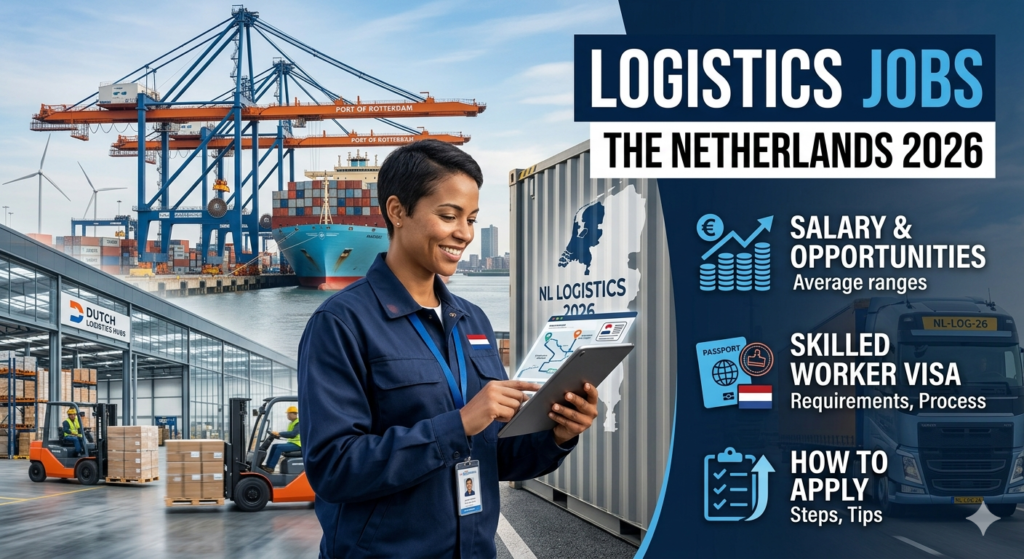
The Netherlands has quietly become one of the most attractive destinations for foreign workers in the logistics sector. Logistics jobs in the Netherlands span everything from forklift operations and warehouse picking to high-level supply chain coordination — and right now, employers across the country are struggling to fill those roles with local talent alone. That gap represents a real opportunity for international applicants who are ready to move and work.
The Dutch logistics market didn’t grow this large by accident. Positioned at the mouth of the Rhine River, with the Port of Rotterdam processing nearly half a billion tonnes of goods annually, the Netherlands has been Europe’s primary gateway for cargo distribution for centuries. Today, that geographic advantage is backed by some of the most sophisticated logistics infrastructure on the continent.
For international job seekers, the timing is particularly good. The Dutch government actively supports labour migration in sectors facing shortages, and visa sponsorship for logistics roles is increasingly common. Both large multinationals and mid-sized Dutch companies are now recruiting from abroad — and many include accommodation support as part of the package.
This guide covers everything you need: the types of roles available, realistic salary expectations, how the skilled worker visa process works, which companies are hiring, and exactly how to submit a strong application. If you’ve been researching warehouse jobs in the Netherlands or want to understand the full picture before applying, you’re in the right place.
Why the Netherlands is a Major Logistics Hub in Europe
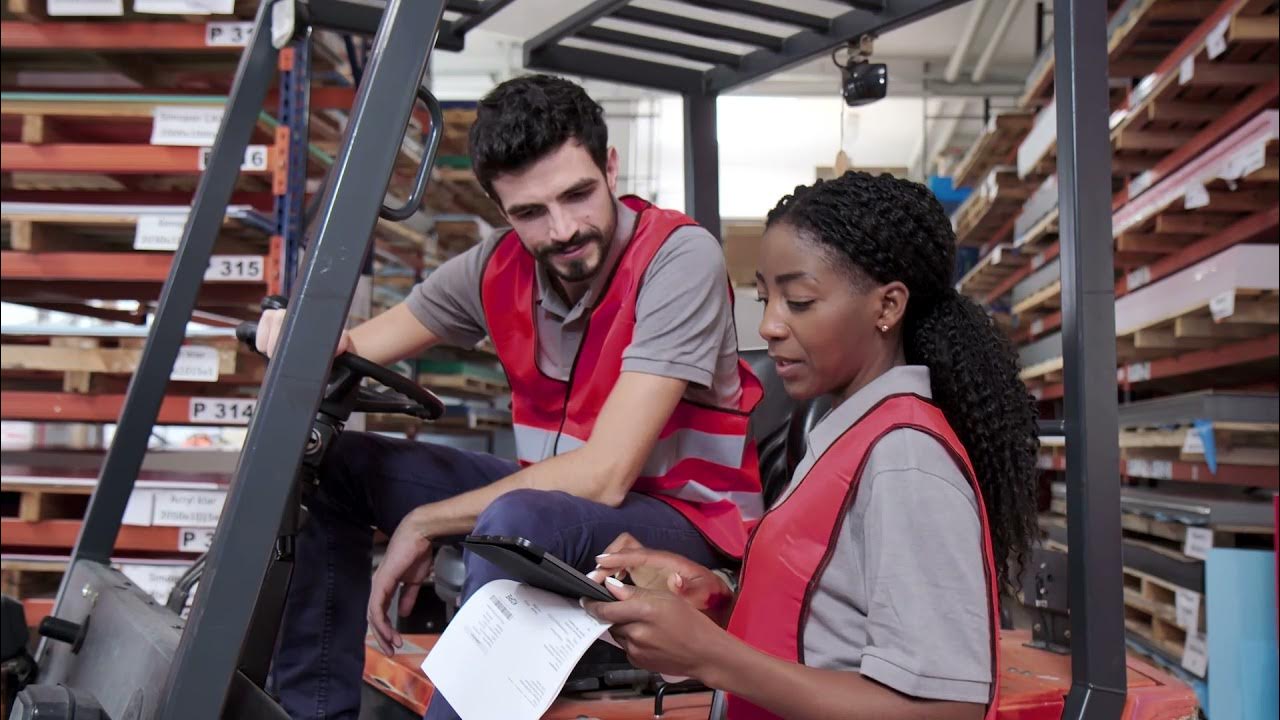
Ask any freight professional in Europe where cargo moves through, and Rotterdam comes up immediately. The Port of Rotterdam is the largest port in Europe — and it’s not even close. Combined with Schiphol Airport, one of the busiest cargo air hubs on the continent, the Netherlands sits at an almost unmatched crossroads for global trade.
What this means practically is that logistics is not a niche sector here — it’s a pillar of the national economy. According to the Dutch government’s own labour market data, logistics and transport employ over 800,000 workers across the country, making it one of the top three industries by workforce size. The sector contributes roughly 8% of GDP, a figure that has stayed consistent even through global supply chain disruptions.
The demand for foreign workers in logistics in the Netherlands is also driven by demographics. An aging Dutch workforce and a very low national unemployment rate — consistently below 4% — mean employers simply cannot fill all their vacancies domestically. Recruitment agencies and multinationals have expanded their international hiring as a direct result, with many now offering structured visa support and relocation packages specifically to attract workers from outside the EU.
Key Market Facts — 2026
The Netherlands ranks 1st in the EU for logistics performance index. Rotterdam handles over 469 million tonnes of cargo per year. Over 12,000 transport and logistics vacancies remain unfilled quarterly.
Beyond the infrastructure, the Netherlands offers a working environment that foreign employees consistently rate positively — structured contracts, clear labour protections, regulated working hours, and a culture that values efficiency without sacrificing safety standards. For workers coming from countries with less regulated labour markets, that combination matters enormously.
Types of Logistics Jobs in the Netherlands for Foreign Workers
see also: Netherlands IT Jobs 2026: Top Software Roles, Salaries, Visa Sponsorship & How to Apply
Finance Jobs in the Netherlands 2026: High-Paying Roles, Visa Sponsorship & Application Process
The logistics sector in the Netherlands is broad. While warehouse work and driving roles tend to get the most attention, the full range of available positions stretches much further — and foreign workers are being recruited across most of them. Here’s a breakdown of the main job categories you’ll encounter:
Warehouse Operative
Picking, packing, and sorting stock. Entry-level but widely available across the country. Most roles require physical fitness and basic Dutch or English.
Forklift Driver
Forklift jobs in the Netherlands are in high demand. A valid forklift certificate (VCA or equivalent) is usually required, though some employers offer on-site training.
Logistics Coordinator
Planning and overseeing shipments, tracking deliveries, communicating with suppliers. Typically requires logistics experience and solid English proficiency.
Supply Chain Assistant
Supports procurement, inventory management, and vendor liaison. Growing demand in e-commerce and pharmaceutical logistics.
Dispatch Staff
Coordinating driver schedules, managing delivery windows, and handling last-mile logistics paperwork. Evening and weekend shifts are common.
Truck Loading Roles
Physically demanding but well-compensated, especially with shift and weekend premiums. Often the entry point for workers new to Dutch logistics.
Packaging Jobs
Assembly-line packaging for food, pharmaceuticals, and consumer goods. Several roles are available through staffing agencies with immediate start dates.
It’s also worth noting that some companies — particularly those operating large fulfilment centres — hire in cohorts, especially during peak seasons like Q4. If you’re applying in mid-year, you may find that contracts start in September or October when demand accelerates ahead of the holiday period.
Transport jobs in the Netherlands also include HGV and lorry driver roles, though these typically require a European Category C or CE driving licence. For non-EU applicants, licence conversion is possible but adds steps to the process.
Average Salary for Logistics Jobs in the Netherlands
Let’s be honest about wages — they’re the first thing most people want to know. The Netherlands enforces a statutory minimum wage that’s among the highest in the EU, and logistics roles typically sit above that floor. In 2026, the Dutch minimum wage stands at approximately €13.27 per hour for adults, but warehouse and logistics roles generally start at €13.50–€15.50 depending on the employer and location.
Beyond the base rate, the Dutch wage structure includes several legal supplement categories that can push take-home pay significantly higher:
Pay Component |
Rate / Details |
Estimated Monthly Impact |
|---|---|---|
| Base hourly wage | €13.50 – €16.00/hr | €2,160 – €2,560 |
| Overtime (150%) | 1.5× base for hours beyond 40/week | +€200 – €400 |
| Weekend shift premium | 25–50% extra on Saturday/Sunday | +€150 – €320 |
| Night shift allowance | 20–35% on shifts after 22:00 | +€100 – €250 |
| Accommodation deduction (if provided) | €150 – €350/month withheld | –€150 – –€350 |
| Estimated net monthly (standard shifts) | After tax & social contributions | €1,800 – €2,400 |
| Estimated annual gross | Including supplements | €28,000 – €38,000 |
Many Dutch logistics employers provide on-site or nearby accommodation — especially for workers relocating from abroad. If housing is deducted from your wage, ensure the net amount never falls below the statutory minimum. This is a legal requirement under Dutch labour law, and reputable employers follow it strictly.
Logistics coordinators and supply chain professionals earn considerably more. Mid-level coordinator roles typically pay between €2,800 and €3,800 gross per month, while experienced supply chain managers can command €4,500–€6,000+. These roles also qualify more easily for the skilled worker visa due to higher salary thresholds.
The holiday allowance — called vakantiegeld in Dutch — is another feature worth understanding. By law, all workers in the Netherlands receive 8% of their annual gross salary as a holiday bonus, usually paid out in May. Over a full year, that amounts to roughly one month’s extra salary. For someone earning €2,200 net per month, that’s an additional €1,760 annually that many foreign workers don’t factor into their calculations when comparing offers.
Skilled Worker Visa for Logistics Jobs in the Netherlands
The pathway that most international workers use to relocate for logistics employment is the Dutch Work Permit (TWV), issued through the UWV (Employee Insurance Agency), combined in some cases with a residence permit through the IND (Immigration and Naturalisation Service). For higher-earning roles, the Skilled Worker Visa (Kennismigrant) offers a faster, more direct route.
The key requirement for skilled worker visa sponsorship is that your Dutch employer must be a recognised IND sponsor. This status isn’t automatic — companies apply for it and are audited — but the vast majority of major logistics firms operating in the Netherlands already hold recognised sponsor status. DHL, GXO, CEVA, PostNL, and DB Schenker all qualify.
For non-EU citizens, the general work permit (TWV) is the more common route for entry-level and operative roles. Your employer applies on your behalf, and the process typically takes 5–8 weeks from submission. The IND website at ind.nl/en provides the most current processing timelines and documentation requirements.
- Permit duration: typically 1 year initially, renewable annually
- Your employer sponsors the permit — you do not apply independently
- After 5 years of legal residence, you may qualify for permanent residency
- EU Blue Card is available for high-skilled roles with gross salary above ~€5,560/month
- Family members can often join on a dependent visa once your permit is active
Requirements for the Skilled Worker Visa
The skilled worker visa in the Netherlands — officially the Kennismigrant permit — has a salary threshold that changes annually. As of 2026, the gross monthly salary requirement for most applicants is around €4,840 per month for standard skilled workers, and €3,549 for workers under 30. This places the visa somewhat out of reach for entry-level warehouse roles, but it becomes relevant for logistics coordinators, supply chain managers, and senior operations professionals.
Here’s what you’ll need to meet the core requirements:
- A signed employment contract with a recognised IND sponsor employer
- Gross salary meeting the applicable 2026 threshold
- A valid passport (at least 6 months beyond intended stay)
- No tuberculosis risk (TB test required for applicants from certain countries)
- Health insurance arranged — mandatory in the Netherlands
- Degree or vocational qualification relevant to the role (for skilled worker track)
- A clean criminal background (some employers run their own checks)
Official IND Resource
For the most accurate and up-to-date visa requirements, always check www.ind.nl/en. Processing times, salary thresholds, and documentation lists are updated regularly.
For workers from EU/EEA countries, the process is considerably simpler — freedom of movement applies, so no work permit is required. You register with the municipality (gemeente) upon arrival and can start working immediately once you have a job offer. That’s one reason so many logistics workers in the Netherlands come from Eastern Europe, particularly Poland, Romania, and Bulgaria.
How to Apply for Logistics Jobs in the Netherlands
Applying from abroad requires more preparation than a domestic job search, but it’s genuinely manageable if you approach it systematically. Here’s a step-by-step breakdown that reflects what actually works:
Prepare a Europass CV
Build your online presence
Apply through verified platforms
Confirm visa sponsorship before applying
Prepare for a video or phone interview
Plan your relocation early
Documents Needed for Application
Gathering documents ahead of time avoids delays once a job offer arrives. You’ll typically need:
- Valid passport (at least 12 months validity recommended)
- Updated CV (Europass format preferred)
- Relevant certifications (forklift licence, VCA safety certificate, WMS training records)
- Educational diplomas or vocational certificates
- Two professional references or a reference letter from a previous employer
- Proof of English proficiency if required (many operational roles don’t require formal proof, but office-based roles may)
- A signed employment contract (required before the IND permit application can proceed)
- Criminal background check from your home country or country of residence
Best Companies Offering Logistics Jobs in the Netherlands
Several of the world’s largest logistics operations run major Dutch facilities — and a number of them have explicit international hiring programmes. Here are the key employers to target:
DHL
One of the largest employers in Dutch logistics, with major hubs near Amsterdam Schiphol and Rotterdam. Regularly recruits internationally for warehouse, sorting, and operations roles. Recognised IND sponsor status confirmed.
UPS
Operates a large sorting and distribution centre in the Netherlands. Offers both seasonal and permanent contracts for warehouse operatives, forklift drivers, and logistics coordinators.
CEVA Logistics
A global third-party logistics (3PL) provider with multiple Dutch facilities. Contracts available across supply chain support, warehouse management, and freight coordination roles.
GXO Logistics
Specialist in contract logistics and outsourced supply chain operations. GXO Netherlands has recruited actively from abroad and offers structured onboarding for international hires.
PostNL
The Netherlands’ national postal and parcel service, and one of the largest logistics employers in the country. Regularly hires for sorting, dispatch, and warehouse roles — especially in peak periods.
DB Schenker
A global freight and supply chain company with a significant Dutch presence. Hires across transport coordination, customs clearance support, and warehousing roles. Strong reputation for structured contracts.
Beyond these multinationals, several Dutch-headquartered companies — including Kuehne+Nagel Netherlands, Broekman Logistics, and Van den Bosch Transporten — also hire internationally and offer competitive packages. Recruitment agencies like Randstad and Adecco handle much of the hiring for these companies’ operational roles.
Verified Websites to Apply for Logistics Jobs in the Netherlands
Using the right platforms makes a significant difference in application quality and response rates. Avoid generic international job aggregators where possible — Dutch logistics roles fill quickly and often go through specialist recruiters before appearing on mainstream sites. These are the platforms worth bookmarking:
- IND — Immigration and Naturalisation ServiceOfficial Dutch government site for all visa and residence permit applications. Check recognised sponsor lists and current processing times here.
- Work in Holland — Warehouse & LogisticsDedicated to international job seekers in the Netherlands. Listings include accommodation details and visa sponsorship status.
- Celoria Recruitment — Logistics Jobs with AccommodationSpecialist recruiter placing foreign workers in Dutch logistics roles that include housing support. Highly relevant for non-EU applicants.
- UndutchablesFocuses on multilingual professionals in the Netherlands. Strong for logistics coordinator, supply chain, and office-based operations roles.
- Randstad NetherlandsOne of the largest staffing agencies in the country. Covers the full range of logistics and warehouse vacancies, from temporary to permanent contracts.
- Adecco NetherlandsGlobal staffing agency with a strong Dutch logistics division. Good for both skilled and unskilled logistics positions across the country.
Tips to Secure Logistics Jobs in the Netherlands Faster
After researching what works for international candidates in this market, a few practical strategies consistently make the difference between a long wait and a quick offer:
Get your VCA safety certificate before applying.
VCA (Veiligheid, gezondheid en milieu Checklist Aannemers) is the Dutch safety certification widely required for warehouse and logistics environments. Many employers prefer candidates who already hold this. Preparation materials are available in multiple languages.
Apply to staffing agencies first, not just direct employers.
In the Netherlands, a large proportion of logistics workers — especially in the early stages of their contracts — are placed through agencies like Randstad and Adecco. Getting on an agency’s books gives you access to multiple employers simultaneously.
Be explicit about your visa situation in cover letters.
Don’t leave recruiters to guess. State your nationality, current location, and whether you need visa sponsorship clearly and early. Recruiters appreciate candidates who make their situation transparent from the start.
Target roles in logistics hotspots.
Rotterdam, Amsterdam, Tilburg, and Venlo have the highest concentration of warehouse and logistics vacancies. Being flexible about which region you’re willing to relocate to significantly increases your options.
Learn basic Dutch phrases.
You don’t need to be fluent, and many operational roles function in English. But even minimal Dutch — greetings, basic safety terms, common workplace phrases — signals to Dutch employers that you’re serious about integrating. It genuinely helps.
Follow Dutch logistics companies on LinkedIn.
Many companies post vacancies on LinkedIn before they appear on job boards. Following and engaging with pages from GXO, DHL Netherlands, PostNL, and similar companies puts you in an advantaged position when new roles go live.
Ask about Netherlands jobs with accommodation upfront.
Housing near major logistics hubs — especially in the Randstad region — is tight and expensive. Several specialist recruiters (including Celoria) specifically advertise roles that bundle accommodation with the contract. Prioritising these reduces your setup costs considerably.
Conclusion on Logistics Jobs in the Netherlands
The Dutch logistics sector isn’t just looking for workers — it genuinely needs them, and the infrastructure to welcome international recruits is more developed than in most European countries. Logistics jobs in the Netherlands offer competitive wages, clear legal protections, structured visa pathways, and the backing of some of the world’s most recognisable freight and warehousing companies.
For international candidates, the path forward is clearer than it might seem. The combination of employer-sponsored permits, established recruitment agencies with international divisions, and platforms built specifically for foreign job seekers makes this a realistic move — not just an aspiration. The key is preparation: the right documents, the right platforms, and a clear understanding of how the Dutch visa and employment system works.
Start with a strong CV, identify whether your target roles require a standard work permit or the skilled worker route, and focus your applications on recognised sponsors. The opportunities are real, the demand is sustained, and for workers willing to relocate and commit to the role, the Netherlands rewards that investment well.
Whether you’re targeting a forklift position in Rotterdam or a supply chain coordinator role in Amsterdam, the steps are the same: research thoroughly, apply systematically, and don’t underestimate the value of professional certification before you land. The Dutch logistics market is open — and 2026 is a strong year to move.
Ready to Start Your Dutch Logistics Career?
Thousands of logistics roles are actively hiring international workers right now. Don’t wait — update your CV, confirm your visa eligibility, and submit your first application today.
Official Resources
Frequently Asked Questions
Can foreigners get logistics jobs in the Netherlands without speaking Dutch?
Yes, many logistics companies in the Netherlands operate in English, particularly multinationals like DHL, GXO, and CEVA. For warehouse operative and forklift roles, basic English is usually sufficient. However, learning some Dutch will strengthen your application and improve your day-to-day experience on the job floor.
Do logistics employers in the Netherlands provide accommodation for foreign workers?
Many do, especially staffing agencies and specialist recruiters like Celoria Recruitment that specifically advertise Netherlands jobs with accommodation. Housing is usually deducted from your monthly wage at a regulated rate. Always confirm the net take-home amount in writing before signing any contract.
What is the minimum salary for the Dutch skilled worker visa in 2026?
In 2026, the skilled worker visa (Kennismigrant) requires a gross monthly salary of approximately €4,840 for standard applicants, or €3,549 for workers under 30. These thresholds are adjusted annually. Most entry-level warehouse and operative roles don’t meet these thresholds and instead use the standard work permit (TWV) route.
How long does it take to get a Dutch work permit for logistics jobs?
The standard work permit (TWV) process typically takes between 5 and 8 weeks once your employer submits the application to UWV. The skilled worker visa through IND is generally faster, often processed within 2–3 weeks when the employer is a recognised sponsor. Processing times can vary, so always check the current timeline at ind.nl/en.
Which cities in the Netherlands have the most logistics job opportunities?
Rotterdam leads due to the port, followed by Amsterdam (Schiphol cargo hub), Tilburg (a major e-commerce fulfilment centre cluster), and Venlo (a key cross-border logistics corridor near Germany). The broader Randstad region — which includes Rotterdam, Amsterdam, Utrecht, and The Hague — accounts for the majority of available positions.