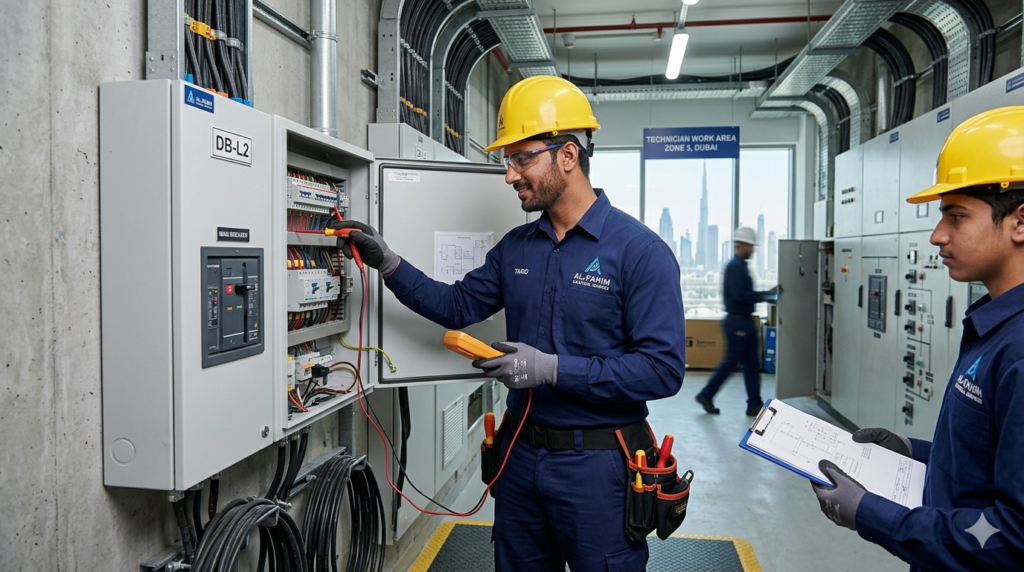

Salaries for electricians in the UAE currently range from AED 2,500 to AED 12,000 per month, depending on specialization and experience level. Most employers sweeten the deal further with free accommodation, medical insurance, annual flight allowances, and end-of-service gratuity. For skilled tradespeople from South Asia, Southeast Asia, Africa, and the Arab world, the UAE remains one of the most financially rewarding destinations available without requiring a university degree.
This guide covers everything you need to know: which sectors are hiring, what qualifications employers expect, how salaries break down by role, and precisely where to apply.
Why Dubai Electrician Jobs Are in High Demand in 2026

Several powerful forces have converged to create the current hiring boom for electricians across the UAE. Understanding these drivers will help you position your application more effectively and target the right employers.
Infrastructure Megaprojects Driving Construction Jobs Dubai
The UAE government has committed over AED 150 billion in infrastructure spending through 2030. Projects such as the expansion of Dubai Metro’s Blue Line, new terminal facilities at Al Maktoum International Airport, and the ongoing development of Saadiyat Cultural District in Abu Dhabi all require vast teams of licensed electricians. Each new project generates hundreds of electrical contracting positions that remain open for months at a time.
Smart City and Renewable Energy Expansion
Dubai’s D33 Economic Agenda and Abu Dhabi’s Net Zero 2050 strategy are steering billions of dirhams toward solar installations, smart grid infrastructure, and electric vehicle charging networks. These technologies require electricians who can work with building management systems (BMS), photovoltaic panels, and low-voltage intelligent installations — skills that are in short supply relative to demand.
Real Estate and Hospitality Boom
Dubai’s residential property market grew by over 20% in transaction volume in 2025, and construction pipelines remain packed heading into 2026. New hotel openings, residential towers, and mixed-use developments across Business Bay, Dubai Creek Harbour, and Yas Island in Abu Dhabi all require substantial electrical installation workforces. Maintenance electricians are equally in demand once buildings are handed over.
Workforce Localisation Creating Skilled Trades Jobs UAE
While the UAE has been gradually expanding Emiratisation in certain white-collar sectors, the skilled trades — including electrical work — continue to draw the majority of their workforce from expatriate professionals. This creates a wide and consistent channel of opportunity for qualified foreign nationals who meet the technical requirements.
Latest Dubai Electrician Job Opportunities
See also: Electrician Jobs in the USA 2026: Visa Sponsorship, Salary & Requirements
Australia Ausbildung Jobs with Visa Sponsorship: Latest Opportunities and Requirements
Not all electrician roles are alike. The UAE market rewards specialists who can clearly articulate their focus — and employers are increasingly precise about the profiles they are seeking. Here is a breakdown of the most active hiring categories for Dubai electrician jobs right now.
Construction Electrician Jobs — Dubai Electrician Roles on Active Sites
Construction electricians work on new-build projects, handling conduit installation, cable pulling, panel wiring, and electrical rough-ins. In Dubai, these roles are concentrated along the new metro corridors, in Emaar’s large-scale residential developments, and across the major contractor portfolios of companies like Arabtec, Drake & Scull, and ALEC Engineering.
Employers in this category typically require a minimum of 2–3 years of site experience, a valid trade certificate, and — increasingly — familiarity with BIM documentation processes. Salaries range from AED 2,500 to AED 5,500 per month with accommodation included.
Industrial Electrician Jobs
Industrial electricians service manufacturing facilities, food processing plants, logistics warehouses, and data centres. Jebel Ali Free Zone (JAFZA), Dubai Industrial City, and KIZAD (Khalifa Industrial Zone Abu Dhabi) are home to hundreds of multinational manufacturers actively recruiting skilled electrical technicians.
High-voltage experience, PLC (Programmable Logic Controller) knowledge, and motor control competency are particularly valuable in this segment. Mid-level industrial electricians in the UAE typically earn AED 4,000–AED 7,500 monthly.
Maintenance Electrician Jobs
Facilities management companies such as Emrill, Farnek, Transguard, and Khidmah are among the UAE’s most consistent hirers of maintenance electricians. These roles involve preventive and corrective maintenance of electrical systems across residential towers, shopping malls, and commercial offices.
Maintenance electricians benefit from stable, long-term employment contracts and predictable working hours compared to site-based roles. Packages typically include accommodation, transport, and medical coverage on top of a base salary of AED 2,800–AED 5,500.
MEP Electrician Jobs UAE — The High-Value Specialisation
MEP (Mechanical, Electrical, and Plumbing) electricians represent the premium tier of the trade in the UAE. They are embedded within multi-disciplinary project teams and often hold supervisory responsibilities, coordinating with mechanical engineers, HVAC technicians, and project managers.
The best MEP electrician jobs UAE employers are offering in 2026 include roles with AECOM, Parsons, Bechtel, and Syska Hennessy Group. These positions typically require 5+ years of MEP experience, a recognised trade certification, and strong English communication skills. Salaries in this category can reach AED 8,000–AED 12,000 for senior-level professionals.
Abu Dhabi Electrician Vacancies for 2026
While Dubai tends to dominate headlines in the UAE jobs market, Abu Dhabi Electrician vacancies are equally competitive — and in several sectors, they offer higher salaries and more stable long-term employment.
Oil and Gas Sector Opportunities
ADNOC (Abu Dhabi National Oil Company) and its subsidiaries — including ADNOC Offshore, ADNOC Refining, and ADNOC Gas — are among the most prestigious employers of UAE Electrical Technician Jobs in the region. Electricians working in oil and gas installations must hold offshore safety certifications (such as BOSIET or OPITO) in addition to their core trade qualifications.
The financial rewards are significant: instrument and electrical technicians in Abu Dhabi’s energy sector often command packages worth AED 7,000–AED 15,000 per month, inclusive of shift allowances, offshore rotation bonuses, and comprehensive insurance coverage.
Commercial Building Projects
Abu Dhabi’s commercial landscape is being reshaped by several major initiatives, including the Zayed City master plan, new mixed-use districts on Reem Island, and large-scale hotel developments linked to the 2030 Tourism Strategy. Main contractors operating in Abu Dhabi — including Multiplex, Al Habtoor Engineering, and Consolidated Contractors Company (CCC) — are actively recruiting construction and fit-out electricians.
Abu Dhabi-based commercial projects tend to run on longer timelines than Dubai counterparts, offering electricians greater job stability and reduced uncertainty between contracts.
Government Infrastructure Projects
The Abu Dhabi government’s ongoing investments in public transport — particularly the Etihad Rail network and the expanding Abu Dhabi Metro system — are generating consistent demand for specialised rail and traction electricians. Similarly, upgrades to water treatment facilities and power generation infrastructure under TAQA and ADWEC contracts provide long-term roles for electricians with public utility experience.
Qualifications Required for Dubai Electrician Careers
UAE employers are increasingly selective about the credentials they accept, and presenting a well-documented qualification profile will significantly strengthen your application for Dubai Electrician careers.
Educational Background
A diploma or vocational certificate in electrical engineering or electrical installation from an accredited institution. ITI certificates from India, City & Guilds from the UK, and TVET qualifications from the Philippines are all widely recognised.
Trade Certifications
DEWA (Dubai Electricity & Water Authority) Approved Contractor status is mandatory for work on Abu Dhabi and Dubai public infrastructure. SEWA, FEWA, and AADC approvals may also be required by location. EtisalatGroup and ABB certifications add value.
Technical Skills
Cable termination and jointing, panel wiring, conduit installation, fault-finding, low-voltage and high-voltage systems, BMS integration, PLC basics, and reading single-line diagrams. MEP-level roles demand project documentation skills.
Experience Requirements
Entry-level: 0–2 years with a recognised certificate. Mid-level: 3–5 years with site experience. Senior/MEP: 6+ years with project supervision background. Oil and gas roles typically require a minimum of 5 years in energy sector environments.
Safety Certifications
NEBOSH, IOSH Working Safely, or site-specific safety inductions are valued across all categories. Offshore roles additionally require BOSIET or HUET certification. First aid certification is a plus.
Language Requirements
Basic English is required for most roles. Supervisory and MEP positions require strong English communication for coordinating with international project teams and reading technical documentation.
Salary Expectations for Dubai Electrician Professionals
Compensation in the UAE is typically expressed as a total package rather than a base salary alone. The figures below reflect total monthly remuneration including standard allowances. Tax-free income remains one of the biggest advantages for Dubai Electrician professionals relocating from higher-tax countries.
| Role / Level | Monthly Salary (AED) | Monthly Salary (USD approx.) | Typical Employer |
|---|---|---|---|
| Entry-Level Electrician (0–2 yrs) | AED 2,500–3,500 | USD 680–953 | FM companies, small contractors |
| General Electrician (3–5 yrs) | AED 3,500–5,500 | USD 953–1,497 | Main contractors, FM firms |
| Industrial / Maintenance Electrician | AED 4,000–7,500 | USD 1,089–2,041 | JAFZA, data centres, logistics |
| MEP Electrician (5+ yrs) | AED 6,000–10,000 | USD 1,633–2,722 | AECOM, Parsons, Bechtel |
| Senior MEP / Electrical Supervisor | AED 8,000–12,000 | USD 2,178–3,267 | Tier-1 EPC contractors |
| Oil & Gas Instrument / E&I Technician | AED 7,000–15,000 | USD 1,905–4,083 | ADNOC, TAQA, Shell |
Additional Benefits and Allowances
Beyond the base salary, most UAE employers — especially larger contractors and oil and gas companies — provide a standard benefits package. These additional perks substantially increase the real value of the compensation on offer.
- Accommodation: Shared or single accommodation, or a housing allowance ranging from AED 500–AED 2,500 per month
- Transport: Company bus, transport allowance, or site-to-camp transfers
- Medical Insurance: Basic to comprehensive health coverage for employee (and sometimes family)
- Annual Return Flight: One economy return ticket to home country per year
- End-of-Service Gratuity: 21 days of basic salary per year for the first 5 years, 30 days per year thereafter
- Overtime Pay: Standard overtime at 1.25× base rate, Friday work at 1.5×
- Visa & Work Permit: Employer-sponsored residency visa and labour permit
How to Apply for Dubai Electrician Jobs in UAE
The application process for Dubai Electrician jobs is straightforward if you approach it systematically. Many candidates lose opportunities simply due to avoidable presentation errors or poor targeting. Follow this process to maximize your chances.
Verify Your Documents First.
Before applying anywhere, confirm that your trade certificate, passport, and relevant safety certifications are valid and available in digital format. Many UAE employers request scanned copies at the initial stage.
Build a UAE-Format CV.
A UAE CV typically includes a professional photo, nationality, date of birth, visa status, and a brief personal summary. Keep it to 2 pages maximum. Highlight your specific electrical specialisation, relevant projects, and any DEWA/SEWA/FEWA certifications prominently.
Search on Multiple Platforms Simultaneously.
Don’t rely on a single job portal. LinkedIn, Indeed.ae, Bayt, Naukrigulf, and GulfTalent all carry different vacancy pools. Set up daily job alerts on each platform using search terms like “electrician Dubai,” “MEP electrician UAE,” or “electrical technician Abu Dhabi.”
Apply Directly to Main Contractors.
Many of the largest contractors in the UAE — ALEC, Arabtec, Drake & Scull, Al Habtoor — list vacancies on their own websites before posting to aggregators. Bookmark their careers pages and check weekly.
Engage Licensed Recruitment Agencies.
Agencies such as Hays Gulf, Michael Page Middle East, TASC Outsourcing, and Gulf Connexions specialise in trades and technical placements. Register your CV with 3–4 agencies simultaneously to widen your reach.
Prepare for a Technical Interview.
Expect questions on fault-finding procedures, reading electrical schematics, safety protocols (especially isolation and LOTO — Lock Out Tag Out), and your most complex past project. Practice concise, specific answers rather than vague generalities.
Follow Up Professionally.
Send a brief follow-up email 5–7 days after applying if you have not received a response. Many hiring managers in the UAE respond positively to polite persistence — it signals genuine interest.
Pro tip
Tailor your CV profile summary for each application. A construction electrician applying for an MEP role should emphasise project-based experience, while one applying to a facilities management company should highlight preventive maintenance and BMS knowledge. Generic CVs consistently underperform in the UAE market.
Verified UAE Job Portals and Application Links
All platforms listed below are active, HTTPS-secured, and verified as of 2026. Each carries UAE-specific electrical and trades vacancies and allows direct application by candidates.
LinkedIn Jobs
Indeed.ae
Bayt.com
Naukrigulf.com
GulfTalent.com
Dubizzle Jobs
Foundit Gulf
Tips to Increase Your Chances of Getting Hired
Build a UAE-Standard CV — Your Dubai Electrician Application’s First Impression
A UAE-standard CV for Dubai electrician roles differs from Western formats in a few important ways. Include a professional headshot (square-cropped, neutral background), your nationality, date of birth, and current visa status at the top. Lead with a focused 3-line professional summary that immediately states your specialisation, total years of experience, and key certifications.
List your work experience in reverse chronological order, and for each role, include the employer name, project value or scale (where possible), your responsibilities, and any quantifiable achievements. “Supervised electrical installation across a 45-storey residential tower in Dubai Marina” tells a recruiter far more than “worked on construction sites.”
Obtain Relevant Certifications Before You Apply
If you do not yet hold a DEWA-recognised qualification or an internationally credible certification such as City & Guilds Level 3 or a recognised NVQ, consider investing in one before applying for UAE roles. These credentials are not just paperwork — they are proof of competency that UAE employers use to shortlist candidates. Many training centres in India, the Philippines, and Kenya now offer UAE-recognised electrical trade certifications.
Apply Consistently and Track Your Applications
The UAE market rewards volume and persistence. Aim to submit 10–15 targeted applications per week rather than 2–3 highly polished ones. Use a simple spreadsheet to track every application — company name, role, date applied, platform, and status. This discipline ensures you follow up at the right time and never apply to the same role twice from different portals.
Network with Recruiters and Industry Contacts
LinkedIn is not just a job board — it is a networking tool. Connect with UAE-based technical recruiters, MEP project managers, and fellow electricians already working in Dubai and Abu Dhabi. A warm referral from a current employee or a recruiter who has placed candidates with a specific employer can cut the time-to-hire considerably. Join UAE electrical trades groups on LinkedIn and WhatsApp communities where job leads are regularly shared among practitioners.
Conclusion: The Time to Apply Is Now
The UAE’s electrical trade market in 2026 is as strong as it has been in a decade. From entry-level construction roles to high-value MEP and oil-and-gas positions, the range of opportunities available to a qualified Dubai Electrician covers virtually every experience level, specialisation, and salary expectation.
Abu Dhabi Electrician vacancies in the energy sector offer some of the highest compensation in the entire region. Dubai’s construction and smart-city pipeline ensures that demand for skilled electrical professionals will remain elevated well into the early 2030s. The combination of a tax-free income environment, employer-sponsored housing and visas, and genuine career advancement opportunities makes the UAE a genuinely compelling destination for electricians at every career stage.
The candidates who secure the best roles are those who act quickly, present their qualifications clearly, and apply consistently across multiple verified channels. Update your CV today, create or refresh your profiles on the platforms listed above, and start applying. Your next Dubai Electrician career chapter could be closer than you think.