
Introduction — Caregiver Jobs in Germany 2026
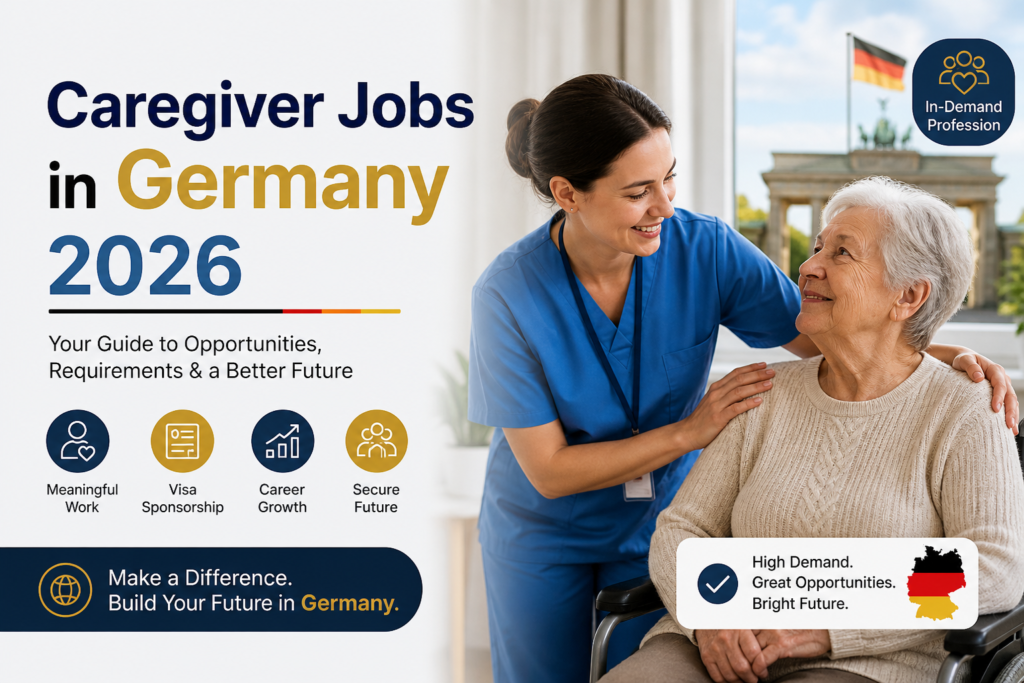
Caregiver Jobs in Germany 2026 reveal a pressing reality: Germany is facing one of the most urgent healthcare workforce crises in Europe. And right now, in 2026, that challenge is creating a massive opportunity for foreign workers ready to step in.
Across nursing homes, private households, and hospitals, caregiver jobs in Germany 2026 are available in record numbers. The German government has responded by opening its immigration pathways specifically for international healthcare workers — including people from Africa, Asia, and Latin America.
If you have a caring heart, some experience, and the willingness to learn basic German, you could be living and working in Germany sooner than you think. This guide gives you everything you need — salaries, visa options, step-by-step instructions, and the insider tips that make the difference.
Why Caregiver Jobs in Germany 2026 Are in High Demand

The demand for caregivers in Germany is not a trend — it is a demographic reality. Three major forces are driving it.
Ageing Population
Nearly 30% of Germany’s population will be over 65 by 2035. Today, over 21% already are. More elderly citizens means more demand for daily care, personal assistance, and nursing support.
Critical Workforce Shortage
Germany has a shortfall of over 35,000 caregivers right now. Local recruitment cannot keep pace. This is why employers are actively looking abroad.
Government-Backed Recruitment
The German government has launched several international recruitment programs and reformed its immigration laws to make it faster and easier for qualified foreigners to work in healthcare.
Preference for Home Care
Many German families prefer home-based care over nursing facilities. This creates consistent demand for live-in and visiting caregivers across the country.
Types of Caregiver Jobs in Germany 2026
see also: Mechanic Jobs in Germany 2026: High Demand, Salaries & Visa Opportunities
Nursing in Australia: Demand, Opportunities & Migration Pathways in 2026
Caregiving covers a wide range of roles in Germany. Some require formal qualifications, while others are accessible with basic training and experience.
1. Elderly Caregiver (Altenpfleger/in)
The most common caregiver role in Germany. Elderly caregivers work in nursing homes or assisted living facilities, helping seniors with personal hygiene, mobility, meals, and emotional support. This is a high-demand role with strong job security.
2. Live-In Home Care Assistant
This role involves living in a client’s home and providing round-the-clock support. Many German families prefer this arrangement. A key benefit: free accommodation and meals are often included, reducing your monthly expenses significantly.
3. Nursing Assistant (Pflegehilfe)
Nursing assistants work under licensed nurses in hospitals or clinics. This is an excellent entry-level role that can serve as a launch pad into a full nursing career in Germany.
4. Home Care Assistant (Ambulante Pflege)
Home care assistants visit multiple patients throughout the day, providing scheduled support. Many workers prefer this role because it offers flexible scheduling and varied daily tasks.
5. Disability Support Worker
These caregivers support people with physical or intellectual disabilities in residential facilities or private homes. The role focuses on building independence and quality of life for clients.
Salary Expectations for Caregiver Jobs in Germany (2026)
One of the most important things to know: Germany has legally mandated minimum wages for caregiving roles. These are regulated and increase periodically. Here is a clear breakdown for 2026.
| Role / Level | Min. Hourly Rate | Estimated Monthly Salary |
|---|---|---|
| Caregiver Assistant | €16.95 / hour | €2,790 – €3,000 |
| Junior Caregiver | €18.26 / hour | €3,010 – €3,300 |
| Senior Caregiver (entry) | €21.58 / hour | €3,550 – €4,000 |
| Experienced Senior Caregiver (10 yrs) | Market Rate | €4,150 – €4,500 |
| Registered Nurse (Pflegefachkraft) | Market Rate | €4,350 – €5,500+ |
These figures reflect the minimum wages planned for July 1, 2026, as announced by the German Federal Government. Many employers pay above these minimums to attract qualified staff.
What Affects Caregiver Jobs in Germany 2026 Salaries
- Experience: More years of caregiving work means higher pay. Ten years of experience can add €600+ per month.
- Location: States like Bavaria, Baden-Württemberg, and North Rhine-Westphalia tend to pay more than rural regions.
- Qualifications: Certified and recognized qualifications unlock higher pay bands immediately.
- Shift type: Night shifts, weekend work, and public holidays attract regulated premium pay on top of your base salary.
- Employer type: Private clinics and specialized facilities often pay more than standard nursing homes.
Benefits Beyond Salary for Caregiver Jobs in Germany 2026
Health Insurance
Full statutory health and social insurance from day one of employment.
Accommodation
Many employers provide free or subsidized housing, especially for live-in roles.
Relocation Support
Some employers cover flight costs and assist with visa documentation.
Language Training
Paid German language courses are often provided as part of your onboarding.
Requirements for Caregiver Jobs in Germany 2026
Before you apply, make sure you meet these key requirements. Meeting them fully will significantly speed up your application process.
Educational Qualifications
You don’t necessarily need a university degree. However, you do need one of the following:
- A recognized nursing or caregiving qualification from your home country
- A completed apprenticeship or vocational training in healthcare
- A CPR certification (recommended for all roles)
Work Experience for Caregiver Jobs in Germany 2026
While some entry-level roles are open to newcomers, most employers prefer at least 1–2 years of hands-on caregiving experience. Experience in elderly care, nursing homes, or home care gives you a clear advantage.
German Language Requirement
This is the most important requirement. You need to demonstrate a minimum of:
- A2 level — for entry-level assistant roles and live-in care positions
- B1 level — for most standard caregiving and nursing assistant roles
- B2 level — required for patient-facing nursing roles and for career advancement
Start learning German immediately — before you even apply. Online resources like Goethe Institut, Deutsche Welle, and Duolingo are good starting points. Many employers will fund B1 or B2 courses once you are hired.
Other Essential Requirements
- Valid national passport
- Clean criminal record certificate
- Medical fitness certificate
- Recognition of your qualifications by a German authority
- A job offer or employer contract (for most visa types)
Visa Options for Caregiver Jobs in Germany 2026
Germany offers several legal pathways for foreign caregivers to enter and work. Here are the most relevant options in 2026.
Most Common
Skilled Worker Visa
For caregivers with recognized qualifications and a job offer. Your employer assists with Federal Employment Agency approval. Processing takes 1–3 months. This is the primary route for most applicants.
Job Search
Opportunity Card (Chancenkarte)
Germany’s new points-based visa lets you enter for up to 12 months to find work on the ground. You can also work part-time during this period. Ideal if you want to meet employers in person.
For Training
Apprenticeship Visa
Allows you to complete a formal caregiving apprenticeship (Ausbildung) in Germany while earning a training salary. Great if your qualifications need to be upgraded.
High Earners
EU Blue Card
Applicable to qualified nurses and senior caregivers earning above the minimum salary threshold. Provides faster access to permanent residency — sometimes within 21 months.
Path to Permanent Residency
Once you are working in Germany, the path forward is clear. Healthcare workers with consistent employment typically qualify for permanent residency (Niederlassungserlaubnis) within 21–33 months. After that, you can sponsor close family members and access full social benefits.
Step-by-Step Guide to Apply for Caregiver Jobs in Germany 2026
Follow these steps carefully. Each stage builds on the previous one, and skipping steps often causes delays.
-
Start Learning German (Now)
Begin German language training immediately. Aim for at least A2 before applying, and work toward B1 while your application is in progress. This is non-negotiable and is often the biggest bottleneck for applicants.
-
Get Your Qualifications Recognized
Submit your caregiving certificates or nursing diploma to the relevant German authority for recognition. Use anerkennung-in-deutschland.de to find the right body. Start this process early — it can take up to 4 months.
-
Prepare a German-Format CV (Lebenslauf)
German employers expect a specific CV format: include a professional photo, personal details, work history in reverse chronological order, and a cover letter. Avoid generic templates — tailor each application to the specific employer.
-
Search and Apply for Jobs
Use multiple platforms simultaneously (listed in the next section). Apply to at least 10–15 employers. Be specific in your cover letter about why you want to work in Germany and what value you bring.
-
Secure a Job Offer / Contract
Once you receive an offer, ensure the contract clearly states your salary, working hours, visa sponsorship details, and any accommodation or relocation support being provided. Read it carefully before signing.
-
Apply for Your German Work Visa
Submit your visa application at the German Embassy or Consulate in your home country. Documents typically required: signed job contract, recognized qualification proof, language certificate, health insurance confirmation, biometric photo, and your passport.
-
Prepare for Your Move to Germany
Once your visa is approved (usually valid for 1 year, renewable), arrange your travel, register your address in Germany (Anmeldung) within two weeks of arrival, and begin your employment. Your employer should guide you through local onboarding.
Top Websites to Find Caregiver Jobs in Germany 2026
Use these trusted platforms to search for caregiver jobs in Germany with visa sponsorship.
1. Official Government Job Portal:
2. European Job Mobility Portal (EURES)
3. Direct Caregiver Job Platform
4. Caregiver Job Marketplace
5. Large Care Company (Multiple Locations)
6. Recruitment Agency (With Salary + Support)
https://www.hektor-personal.de/job/elderly-caregiver/
7. Social & Care Organization Jobs
Challenges for Caregiver Jobs in Germany 2026
It is important to be honest: working as a foreign caregiver in Germany is rewarding, but it does come with real challenges. Knowing these upfront helps you prepare.
- Language Barrier: German is essential. Even at B1 level, daily communication with elderly patients, families, and colleagues can be difficult. Commit to continuous learning — it gets much easier within the first six months.
- Qualification Recognition Delays: The process of getting your home country credentials recognized in Germany can take 1–4 months and may require additional bridging courses if there are skill gaps.
- Cultural Differences: Germany has a direct communication style and strong emphasis on punctuality and documentation. Adapting your work style to German professional culture takes time but is very manageable.
- Initial Loneliness: Moving to a new country alone can be isolating, especially when you’re still learning the language. Building social connections early — through expat communities and colleagues — makes a big difference.
- Physical and Emotional Demands: Caregiving is physically demanding (lifting, transfers) and emotionally challenging. Developing healthy coping strategies and a support network is essential for long-term wellbeing.
Despite these challenges, thousands of foreign workers from the Philippines, India, Vietnam, Nigeria, and Kenya have successfully built careers — and new lives — in Germany’s healthcare sector. The rewards far outweigh the difficulties for those who persevere.
Tips to Increase Your Chances of Getting Hired
The difference between a successful applicant and one who waits months without a response is usually preparation. Here is what sets top candidates apart.
- Start German early: Even A2 German before you apply shows employers you are serious and ready to integrate. This separates you from most applicants immediately.
- Get certified in CPR: A current CPR/first aid certification is looked upon favorably by virtually all German healthcare employers — and it is quick to obtain.
- Apply to 10–20 employers simultaneously: Germany’s healthcare market has many open roles. The more you apply, the faster you will hear back. Don’t wait for a single response before moving on.
- Tailor each application: Generic applications are easy to ignore. Research each employer, mention their specific facility, and explain why you want to work there specifically.
- Use official recruitment channels: Germany’s “Triple Win” program, run with international recruitment agencies, specifically supports workers from partner countries including the Philippines, India, Vietnam, Tunisia, and Bosnia. Check if your country is included.
- Get your documents professionally translated: All documents submitted to German authorities must be officially translated into German. Invest in a certified translator — it avoids costly delays.
- Network online: Join Facebook groups and LinkedIn communities for foreign healthcare workers in Germany. Real-world advice and job referrals from fellow migrants are invaluable.
- Be patient but persistent: The process from application to arrival typically takes 3–8 months. Stay consistent, keep improving your German, and the opportunity will come.
Conclusion — Your Future Starts Here
Germany is not just a job market. For many foreign caregivers, it has become the foundation of an entirely new life — with financial stability, social security, and a clear path to European residency.
In 2026, the opportunity is real and it is wide open. The demand for caregivers is at an all-time high. The government has made immigration easier than ever. Employers across Germany are actively looking for international talent — and they are offering competitive salaries, visa sponsorship, and full benefits to attract the right candidates.
What you need is the right preparation. Start learning German today. Get your qualifications organized. Build your German-format CV. And begin applying — not one employer at a time, but many, simultaneously, with purpose and persistence.
Your Action Plan
1. Start German language lessons this week
2. Research qualification recognition at anerkennung-in-deutschland.de
3. Create your German-format CV (Lebenslauf)
4. Register on Make-it-in-Germany, Indeed.de, and StepStone.de
5. Apply to 10+ employers and follow up within 2 weeks
Thousands of people from Africa and Asia have already made this journey successfully. They started from exactly where you are now — wondering if it was possible. It is. The door to Germany is open. The question is: are you ready to walk through it?
Ready to Start Your Caregiver Jobs in Germany 2026 Journey
Bookmark this guide, share it with friends who are looking for opportunities abroad, and take the first step today. Caregiver jobs in Germany 2026 are waiting — for people exactly like you.