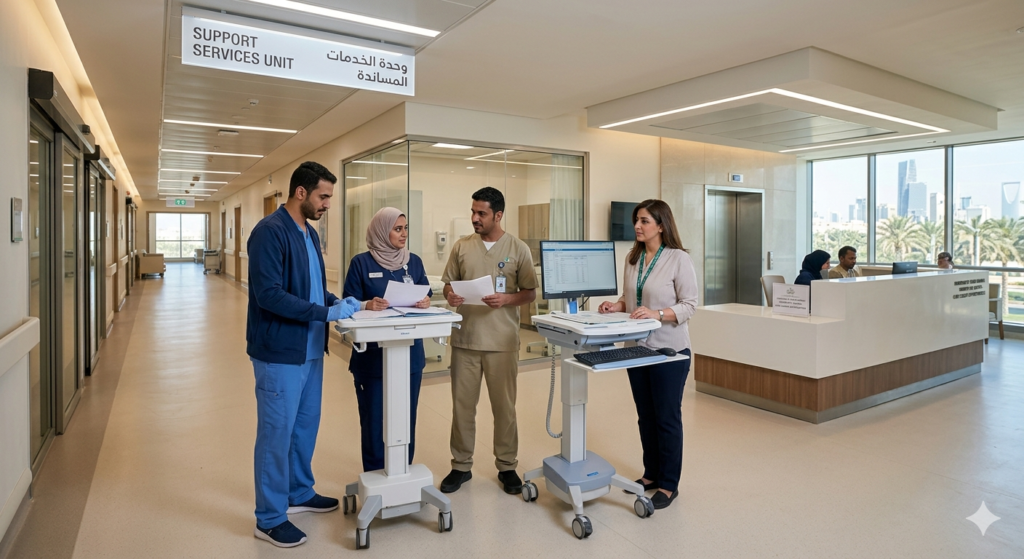

Every week, hospitals across Riyadh, Jeddah, and Dammam are posting hundreds of vacancies for nurses, medical technicians, lab staff, patient care coordinators, pharmacy assistants, and allied health workers. The combination of Vision 2030’s ambitious healthcare expansion, a population that has grown past 36 million, and the sheer speed at which new hospitals are being commissioned has created a workforce gap that the Kingdom simply cannot fill from within its own borders — at least not yet.
This guide breaks down exactly which top healthcare jobs in Saudi Arabia are available to expats, what the hiring process looks like, what you can realistically earn, and how to apply directly. Whether you’re a nurse from the Philippines, a lab technician from India, a physiotherapist from Kenya, or a radiographer from the UK, there is a concrete path to a hospital position in Saudi Arabia right now.
Saudi Arabia’s Healthcare Sector in 2026: What’s Driving the Boom

Saudi Arabia is in the middle of a healthcare transformation that has few parallels globally. The Health Sector Transformation Program — a pillar of Vision 2030 — is converting the country’s historically government-dominated system into a decentralized, insurance-based model with a much larger private sector footprint.
Consider these numbers: the Kingdom needs 84,000 new hospital beds by 2030, has committed over SAR 190 billion in healthcare spending in 2025 alone, and is targeting the creation of more than 200,000 new healthcare sector jobs under Vision 2030. In practice, that means hospitals are adding wards, opening new facilities, and recruiting aggressively — including from overseas.
Meanwhile, the public health insurance rollout is expanding coverage to all Saudi citizens by 2026, which is directly increasing patient throughput in hospitals and clinics. More insured patients mean more demand for every category of healthcare worker — not just doctors, but also the support staff who keep wards running.
Why Top Healthcare Jobs in Saudi Arabia Still Go to Expats
A fair question to ask is: with Saudization policies pushing more Saudi nationals into the workforce, why are expat healthcare workers still in demand? The honest answer is structural. Saudi Arabia’s nursing and allied health training pipeline, while growing fast, cannot graduate qualified staff fast enough to meet current demand. It will take three to four years before newly enrolled Saudi healthcare students enter the workforce in sufficient numbers.
The current picture tells the story clearly. Expatriates make up approximately 60% of physicians, 57% of nurses, and 61% of pharmacists practicing in the Kingdom. The Saudization initiative has actually increased demand for qualified expats in some areas, because it has raised the bar for who gets hired — hospitals want experienced, credentialed professionals who can also mentor and train the next generation of Saudi staff.
Key Insight
Expat healthcare workers who actively support training and mentorship of local Saudi colleagues are viewed especially favorably by hospital HR departments. Highlighting this willingness in your application letter can meaningfully improve your chances.
For expats from Africa, Asia, and Europe specifically, the recruitment landscape in 2026 is genuinely competitive — not in the sense that it’s hard to get hired, but in the sense that hospitals are competing with each other to attract qualified candidates.
Top Healthcare Jobs in Saudi Arabia for Support Staff
While most people focus on physician and surgeon roles, the reality is that hospitals have the greatest volume of openings in support and allied health positions. These are the roles where expat hiring is most active, most consistent, and most accessible to mid-career professionals without postgraduate qualifications.
Registered Nurse (RN)
The single highest-volume healthcare hiring category. ICU, surgical, pediatric, and oncology nursing are particularly in demand across major hospital groups.
SAR 6,000 – 18,000/mo
Medical Laboratory Technician
Pathology, hematology, and microbiology labs across Riyadh and Dammam are actively hiring. ASCP or equivalent certification is highly valued.
SAR 5,500 – 10,000/mo
Radiographer / Imaging Technologist
CT, MRI, and ultrasound technologists are in short supply across both public and private hospitals. Demand is especially strong in major cities.
SAR 6,000 – 12,000/mo
Physiotherapist
Sports medicine, orthopedic rehab, and stroke recovery units all require physiotherapy staff. The Saudi sports industry boom has added more private clinic demand.
SAR 6,500 – 13,000/mo
Pharmacy Technician / Pharmacist
Hospital pharmacies, outpatient dispensing units, and the booming retail pharmacy market are all recruiting. Saudi Commission for Health Specialties registration required.
SAR 5,000 – 12,000/mo
Patient Care Coordinator
Especially in large hospital groups serving international patients. Strong English and a healthcare background are essential. Arabic is a significant advantage.
SAR 5,000 – 9,000/mo
Additional Top Healthcare Jobs in Saudi Arabia Worth Targeting
- Dialysis Technician — chronic kidney disease rates in Saudi Arabia are among the highest globally, creating consistent demand
- Respiratory Therapist — particularly in ICU and neonatal settings across tertiary hospitals
- Operating Theatre Technician (OTT) — surgical volume across private hospitals is growing rapidly
- Dental Nurse / Dental Technician — private dental chains are expanding aggressively in urban centers
- Infection Control Nurse — post-pandemic, this is now a mandated role in all hospitals over a certain bed count
- Medical Coder / Clinical Documentation Specialist — the insurance billing transition is creating entirely new job categories
Salary Expectations for Expats in Top Healthcare Jobs in Saudi Arabia
One of the most important things to understand about healthcare salaries in Saudi Arabia is that the headline figure is not the whole story. The package matters enormously. Most hospital employers — especially public hospitals and large private groups — bundle housing allowances, flight tickets, medical insurance, and end-of-service bonuses into the total compensation. When you factor these in, the real value is considerably higher than the monthly salary figure alone.
Role |
Experience Level |
Monthly Salary (SAR) |
Key Benefits Typically Included |
|---|---|---|---|
| Registered Nurse | Entry (0–5 yrs) | SAR 6,000 – 7,000 | Housing, transport, insurance |
| Registered Nurse | Mid (5–10 yrs) | SAR 8,000 – 10,000 | Housing, annual flights, bonus |
| Senior Nurse / Nurse Manager | 10+ yrs + specialist cert | SAR 12,000 – 18,000 | Full package + schooling allowance |
| Medical Lab Technician | Mid-level | SAR 5,500 – 10,000 | Housing, transport |
| Radiographer | Mid-level | SAR 6,000 – 12,000 | Housing, insurance |
| Physiotherapist | Mid-level | SAR 6,500 – 13,000 | Housing, CPD funding |
| Pharmacist | Mid-level | SAR 7,000 – 12,000 | Housing, transport, bonus |
| Patient Care Coordinator | Any | SAR 5,000 – 9,000 | Transport, insurance |
Important Note on Tax
Saudi Arabia does not levy personal income tax. This means the salary you earn is the salary you keep. For professionals relocating from high-tax countries in Europe or parts of Africa, this significantly changes the net financial picture in your favor.
Work Visa and Sponsorship Process for Healthcare Expats
Saudi Arabia uses an employer-sponsored visa model, which means your hospital or employer handles the bulk of the administrative process. Understanding the steps — and what’s expected of you — removes a lot of the anxiety that first-time applicants feel about the process.
Secure a job offer from a licensed Saudi employer
Credential verification and attestation
SCHS licensure and DataFlow verification
Employer submits work visa application
Medical examination and visa stamping
Arrival and iqama registration
Pro Tip for Faster Processing
Qualifications and Requirements for Top Healthcare Jobs in Saudi Arabia
Requirements vary by role and by employer, but the following baseline qualifications apply across virtually all clinical healthcare positions in Saudi Arabia for expat hires.
- Relevant bachelor’s degree or diploma in your healthcare discipline, from an institution recognized by the SCHS
- Valid professional license in your home country or country of practice — expired licenses are a red flag for recruiters
- Minimum 2 years of post-qualification clinical experience for most nursing and allied health roles; some entry-level support roles accept fresh graduates
- English language proficiency — IELTS Academic 6.0+ (with no band below 5.5) for nursing roles, or equivalent. Some hospitals accept OET instead.
- SCHS registration (or eligibility to obtain it) — this is non-negotiable for clinical practice in Saudi Arabia
- DataFlow Primary Source Verification (PSV) for credential authentication
- Clean criminal background check from all countries of recent residence
- Medically fit per GAMCA standards (HIV negative, TB-free, and other communicable disease clearances are required)
Specific Certifications That Strengthen Your Application
- BLS (Basic Life Support) — required for all clinical roles, no exceptions
- ACLS (Advanced Cardiac Life Support) — especially for ICU, ER, and critical care nurses
- PALS (Pediatric Advanced Life Support) — essential for pediatric nursing and neonatal roles
- ASCP certification — highly valued for medical laboratory roles
- ARRT or equivalent — for radiographers and imaging technologists
Best Cities in Saudi Arabia for Top Healthcare Jobs
Riyadh
The capital and healthcare hub. Home to KFSH&RC, King Saud Medical City, and dozens of private hospital groups. Highest number of vacancies overall.
Jeddah
Saudi Arabia’s second city and a major private healthcare market. Dr. Sulaiman Al Habib and Saudi German Health both operate major facilities here.
Dammam / Al Khobar
Eastern Province hub, home to Johns Hopkins Aramco Healthcare and a significant expat community. Strong demand in industrial and occupational health.
Makkah & Madinah
Hajj and Umrah healthcare infrastructure requires large permanent nursing and support staff rosters. MOH is a major employer in both cities.
Tabuk & NEOM Zone
Giga-project medical infrastructure is ramping up. Healthcare roles tied to NEOM developments command premium packages and offer extraordinary long-term prospects.
Top Hospitals Hiring Expats for Healthcare Jobs in Saudi Arabia
These are the hospitals and healthcare groups with the most consistent, highest-volume international recruitment pipelines. All have established processes for expat sponsorship and active career portals.
King Faisal Specialist Hospital & Research Centre (KFSH&RC)
Saudi Arabia’s flagship tertiary care institution in Riyadh. Employs over 13,500 staff from 67+ nationalities, with 200+ specialist training programs. Offers comprehensive visa support and relocation guidance to international hires. Consistently one of the most professionally rewarding postings in the region.
Saudi German Health (SGH Group)
One of the largest private hospital groups in MENA, with facilities across Riyadh, Jeddah, Dammam, and other cities. Active international recruitment in nursing, radiology, lab sciences, and admin support.
Dr. Sulaiman Al Habib Medical Group (HMG)
A premium private healthcare group operating 10+ hospitals across the Kingdom. Known for competitive packages, modern facilities, and a strong focus on patient experience. Frequently hires nurses and allied health professionals internationally.
National Guard Health Affairs (NGHA)
Operates King Abdulaziz Medical City facilities in Riyadh, Jeddah, and the Western Region. Offers strong job security, excellent benefits, and housing. One of the most respected public healthcare employers for expats.
https://www.ngha.med.sa/English/NGHA/CareerOpportunities/Pages/default.aspx
Fakeeh Care Group
A respected Jeddah-based private hospital group with a long history of international nursing and support staff recruitment. Strong reputation for staff welfare and professional development.
King Saud Medical City (KSMC)
One of the largest public hospitals in the world, with over 1,800 beds. Riyadh-based MOH hospital with active overseas recruitment for nursing and allied health roles.
Johns Hopkins Aramco Healthcare (JHAH)
Operated in partnership between Saudi Aramco and Johns Hopkins Medicine in Dhahran. Serves the Aramco community and surrounding Eastern Province population. Offers exceptional working conditions and expat-friendly packages.
How to Apply Successfully for Top Healthcare Jobs in Saudi Arabia
Applying for a healthcare role in Saudi Arabia is not complicated, but it does require preparation and a clear understanding of what hospitals are evaluating. The process is competitive at the shortlisting stage, not the credential stage — meaning if your qualifications are in order, the main differentiator is how well you present yourself.
Build an Application Package That Stands Out
- Write a targeted CV — your CV should lead with your SCHS eligibility status (or note that you are eligible) and clearly list all relevant certifications in a dedicated section near the top
- Tailor your cover letter to each hospital, referencing specific departments or units you are applying to. Generic letters go straight to the bottom of the pile.
- Gather reference letters early — Saudi hospitals typically require two to three professional references, and sourcing these takes time
- Photograph your documents professionally — scan all certificates, license documents, and transcripts cleanly before submitting. Blurry scans create unnecessary delays
- Apply to multiple hospitals simultaneously — this is both standard practice and strategically sensible, given that visa timelines vary by employer
Where to Find Active Vacancies
- Direct hospital career portals (listed above) — always the highest-quality source
- GulfTalent.com — consistently one of the strongest aggregators for Saudi healthcare roles
- Naukrigulf.com — currently listing 1,300+ healthcare vacancies in Saudi Arabia
- LinkedIn — many hospitals post directly; recruiters for Saudi healthcare also actively source candidates here
- Registered international healthcare recruitment agencies with Saudi placements — legitimate agencies never charge candidates
Watch Out for Recruitment Fraud
Any recruiter or agency asking you to pay upfront fees for visa processing, job placement, or document handling is operating fraudulently. Legitimate Saudi healthcare employers cover these costs. If in doubt, contact the hospital HR department directly to verify any recruitment offer.
Common Mistakes Expat Applicants Make When Applying for Healthcare Jobs in Saudi Arabia
Applying without checking SCHS eligibility first.
If your nursing school or allied health institution is not on the SCHS recognized list, your application will be rejected regardless of how strong your experience is. Check the SCHS website before applying.
Submitting expired professional licenses.
A lapsed license in your home country is a significant red flag. Renew it before applying — even if you have not been actively practicing.
Ignoring English language requirements.
Some applicants assume their years of English-medium practice experience are enough. Many hospitals require a formal score, and it is better to have one ready than to lose a job offer waiting to take a test.
Not researching the city or hospital culture.
Saudi Arabia is not a monolith. Working at an Aramco-affiliated hospital in Dhahran is a very different experience from a government hospital in Makkah. Research matters.
Waiting until a job offer arrives to start document attestation.
The attestation chain takes weeks. Starting after you receive an offer means you delay your own start date and risk the employer moving on to another candidate.
Accepting the first offer without negotiating.
Package negotiation is expected. Base salary, housing allowance, annual flight ticket, and contract renewal bonuses are all negotiable — particularly if you have specialized skills.
Future Outlook: Healthcare Jobs in Saudi Arabia Beyond 2026
The trajectory for top healthcare jobs in Saudi Arabia is firmly upward through the end of the decade. Several macro trends reinforce this outlook for expat professionals thinking about long-term career placement.
Saudi Arabia’s pharmaceutical market is projected to reach USD 7.04 billion by 2028, the medical devices market is heading toward USD 3.1 billion in the same period, and the government’s medical tourism ambition — targeting 500,000 international patients annually by 2030 — will require specialized clinical staff fluent in international patient protocols and multilingual communication.
The NEOM giga-project, spread across the Tabuk region, includes an entire planned healthcare ecosystem from the ground up. Early indications are that NEOM’s healthcare division will be staffed primarily by international professionals, particularly those with experience in smart hospital environments and digital health systems.
For expats who build Saudi Arabia experience and SCHS registration into their CVs now, the professional asset is significant. As GCC healthcare systems continue to professionalize, Saudi Arabia credentials and regional experience will open doors across Bahrain, UAE, Kuwait, and Qatar as well.
Frequently Asked Questions: Top Healthcare Jobs in Saudi Arabia
Can expats from Africa, Asia, and Europe apply for healthcare jobs in Saudi Arabia?
How long does it take to get a work visa for healthcare jobs in Saudi Arabia?
Is Saudi Arabia safe for expat healthcare workers?
Do I need to speak Arabic to work in Saudi healthcare?
What is the SCHS and why does it matter?
Are healthcare salaries in Saudi Arabia really competitive compared to Western countries?
Conclusion: Your Move to Saudi Arabia Starts With One Application
Saudi Arabia’s healthcare expansion is not a short-term trend — it’s a structural shift that will define the Kingdom’s medical landscape through 2030 and beyond. For expat healthcare professionals, that means a hiring market that is genuinely, actively seeking international talent right now.
The top healthcare jobs in Saudi Arabia are not just available — they are well-compensated, professionally rewarding, and backed by some of the most modern medical infrastructure in the world. Whether you are a nurse in Manila looking for your first international posting, a lab technician in Nairobi weighing your options, or a physiotherapist in Manchester ready for a new chapter, Saudi Arabia in 2026 deserves to be at the top of your shortlist.
Start by checking your SCHS eligibility, begin attesting your documents now, and apply directly through the verified hospital career portals listed above. The path is clear. The opportunity is real.
Ready to Land a Healthcare Job in Saudi Arabia?
Browse active vacancies at the top hospitals using the verified career links in this guide — and start your application today. Don’t wait for the “perfect moment.” In a market this active, preparation is the only advantage you need.