
Introduction: Nursing Jobs in Germany 2026
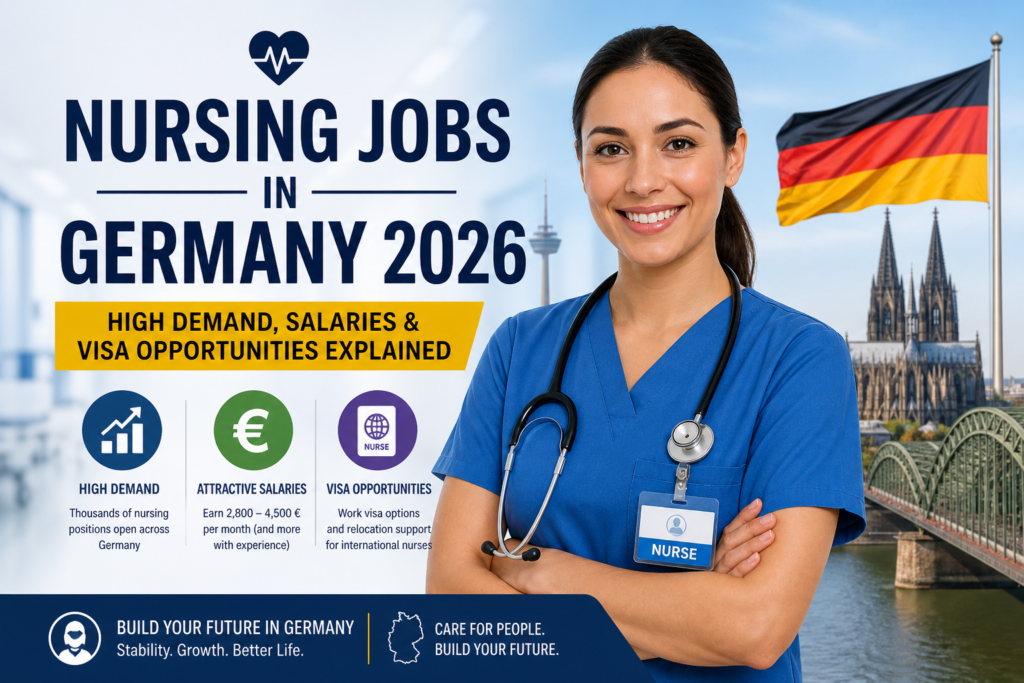
Nursing Jobs in Germany 2026 are in High Demand as Germany experiences one of the most serious healthcare workforce shortages in its modern history. As we move through 2026, the demand for qualified nurses has never been higher. Hospitals, elderly care homes, and specialized clinics are actively searching for skilled professionals — both locally and from abroad.
This is why nursing jobs in Germany 2026 have become one of the most searched topics among international job seekers, particularly those from the Philippines, India, Nigeria, and other developing nations. The German government has responded with new immigration policies and streamlined visa processes to make it easier than ever for foreign nurses to join the workforce.
If you are a qualified nurse looking for a stable, well-paying career in Europe, Germany could be your best opportunity yet. This guide explains everything you need to know — from salary expectations and job types to visa pathways and application tips.
Why Nursing Jobs in Germany 2026 Are in High Demand

An Aging Population
Germany has one of the oldest populations in the world. According to the Federal Statistical Office, nearly 23% of Germans are over 65 — a number that is rising every year. Older residents need more healthcare support, which directly drives demand for nurses in hospitals, rehabilitation centers, and elderly care facilities.
A Critical Healthcare Worker Shortage
Germany currently faces a shortage of over 200,000 healthcare workers, with nurses making up the largest gap. Many trained nurses are approaching retirement age, and domestic training programs simply cannot produce graduates fast enough to fill the void.
As a result, hospitals are understaffed, nurse-to-patient ratios are strained, and care quality is under pressure. This creates a strong, urgent, and long-term demand for nurses in Germany.
Government Recruitment Efforts
The German government has taken deliberate action. The Skilled Immigration Act (Fachkräfteeinwanderungsgesetz) was expanded to make it easier for non-EU professionals — including nurses — to get work visas. Germany has also set up official recruitment partnerships with countries like the Philippines, Mexico, and India.
Types of Available Nursing Jobs in Germany 2026
see also: Nursing in Australia: Demand, Opportunities & Migration Pathways in 2026
Caregiver Jobs in Germany 2026: High Demand, Salaries & Visa Opportunities
Understanding the different roles available helps you figure out where your skills and qualifications best fit. Here are the main categories of nursing jobs in Germany for foreigners:
Registered Nurses (Gesundheits- und Krankenpfleger/in)
These are the most common nursing roles, working in hospitals, clinics, and outpatient care. Registered nurses handle patient assessments, administer medication, assist in surgeries, and coordinate care plans. This role requires formal nursing education and license recognition.
Elderly Care Nurses (Altenpfleger/in)
With Germany’s aging population, elderly care nurses are in exceptionally high demand. These professionals work in nursing homes, memory care units, and private home care settings. The role is physically and emotionally rewarding — and comes with excellent job security.
Specialized Nurses
Germany also needs specialists in intensive care (ICU), pediatric nursing, oncology, psychiatry, and surgical nursing. Specialized roles typically command higher salaries and require additional training or certifications beyond basic nursing qualifications.
Salary Expectations for Nursing Jobs in Germany 2026
One of the biggest attractions of nursing jobs in Germany 2026 is the competitive pay. Salaries are regulated by collective bargaining agreements (Tarifvertrag), which protect workers and ensure fair wages. Here is what you can expect:
| Experience Level | Monthly Gross (€) | Annual Gross (€) |
|---|---|---|
| Entry-level (0–2 years) | €2,800 – €3,200 | €33,600 – €38,400 |
| Mid-level (3–7 years) | €3,200 – €3,800 | €38,400 – €45,600 |
| Senior / Specialist | €3,800 – €5,000+ | €45,600 – €60,000+ |
Beyond your base Germany nurse salary 2026, most employers offer valuable benefits:
- Statutory health insurance — shared between employer and employee
- Paid vacation — typically 28 to 30 days per year
- Overtime pay and night/weekend shift bonuses
- Pension contributions under the national social security system
- Relocation support — many employers offer moving allowances for international hires
Requirements for Nursing Jobs in Germany 2026
Knowing the requirements upfront will save you time and frustration. Here is what you need to work as a nurse in Germany:
Educational Qualifications for Nursing Jobs in Germany 2026
You must have completed a recognized nursing program of at least three years. Your degree must be equivalent to the German standard, which is evaluated through a process called Anerkennung (recognition).
The Anerkennung Process (License Recognition)
This is the most critical step for foreign nurses. Anerkennung is the official evaluation of your foreign nursing qualifications by a German authority (usually the state health ministry). The process checks whether your training matches Germany’s standards. If there are gaps, you may need to complete a compensatory training period or pass an aptitude test.
The good news? Many employers will support you through this process and even pay for bridging courses.
German Language Requirements
Language is non-negotiable. Most nursing roles in Germany require at minimum a B1 level of German, but the majority of hospitals expect B2 level for full professional registration. Some states may require C1 for certain specializations.
Start your German language learning now. This is the single biggest factor in how quickly you can secure a job offer and begin working.
Visa and Immigration Pathways for Nurses
Germany has created several legal pathways for international nurses. Understanding these options is key when planning your move. Here is how the nursing visa Germany process works:
The Skilled Worker Visa
Under the expanded Skilled Immigration Act, nurses with recognized qualifications can apply for a skilled worker visa. This is the most direct route for non-EU nurses. Once you have a job offer from a German employer, you can apply at the German embassy in your home country.
Recognition-Linked Work Visa
If your Anerkennung is still in progress, you can apply for a special recognition visa that lets you enter Germany and complete your qualification approval while already working. This dramatically shortens the waiting time.
EU Blue Card
The EU Blue Card is available for highly skilled workers, including nurses in certain specialized roles. It offers a fast track to permanent residency and allows family members to join you in Germany.
Steps to Apply Nursing Jobs in Germany 2026
How to Apply for Nursing Jobs in Germany 2026
Best Job Portals for Foreign Nurses
-
- Make it in Germany (Official Skilled Workers Portal)
https://www.make-it-in-germany.com - Bundesagentur für Arbeit (Federal Employment Agency Job Board)
https://www.arbeitsagentur.de - Indeed Germany
https://de.indeed.com - Medi-Jobs (Healthcare Job Portal)
https://www.medi-jobs.de - LinkedIn Germany
https://www.linkedin.com
- Make it in Germany (Official Skilled Workers Portal)
Application Tips That Actually Work for Nursing Jobs in Germany 2026
- Write your CV in German, using the European Europass format
- Include a short, focused cover letter addressing why you want to work in Germany specifically
- Attach certified translations of your qualifications
- Be honest about your language level — employers will test you
- Consider working with a licensed recruitment agency that specializes in German healthcare placements
Nursing Jobs in Germany 2026 Challenges
It is important to go in with open eyes. While Germany is a fantastic destination, foreign nurses do face real challenges. Knowing them in advance helps you prepare better.
- Language barrier: Medical German is technical and complex. Even with a B2 certificate, the clinical environment can feel overwhelming at first. Patient communication, documentation, and team coordination all require strong language skills.
- Cultural adjustment: German workplace culture values punctuality, directness, and formality. It may feel different from what you are used to. However, most employers are supportive of international staff during the adjustment period.
- Licensing delays: The Anerkennung process can take anywhere from a few weeks to several months, depending on your home country and the completeness of your documents. Start early to avoid delays in your job start date.
- Housing costs: In cities like Munich, Frankfurt, and Hamburg, finding affordable housing can be difficult. However, many hospitals assist with temporary accommodation for new international hires.
Benefits of Working as a Nurse in Germany
Despite the challenges, the long-term rewards of pursuing nursing jobs in Germany for foreigners are substantial. Here is why thousands of nurses make the move every year:
Ready to Start Your Nursing Career in Germany?
The opportunity is real, the demand is urgent, and the path is clearer than ever. Start by enrolling in a German language course today. Then get your documents in order and explore the portals below to find your first German employer.